
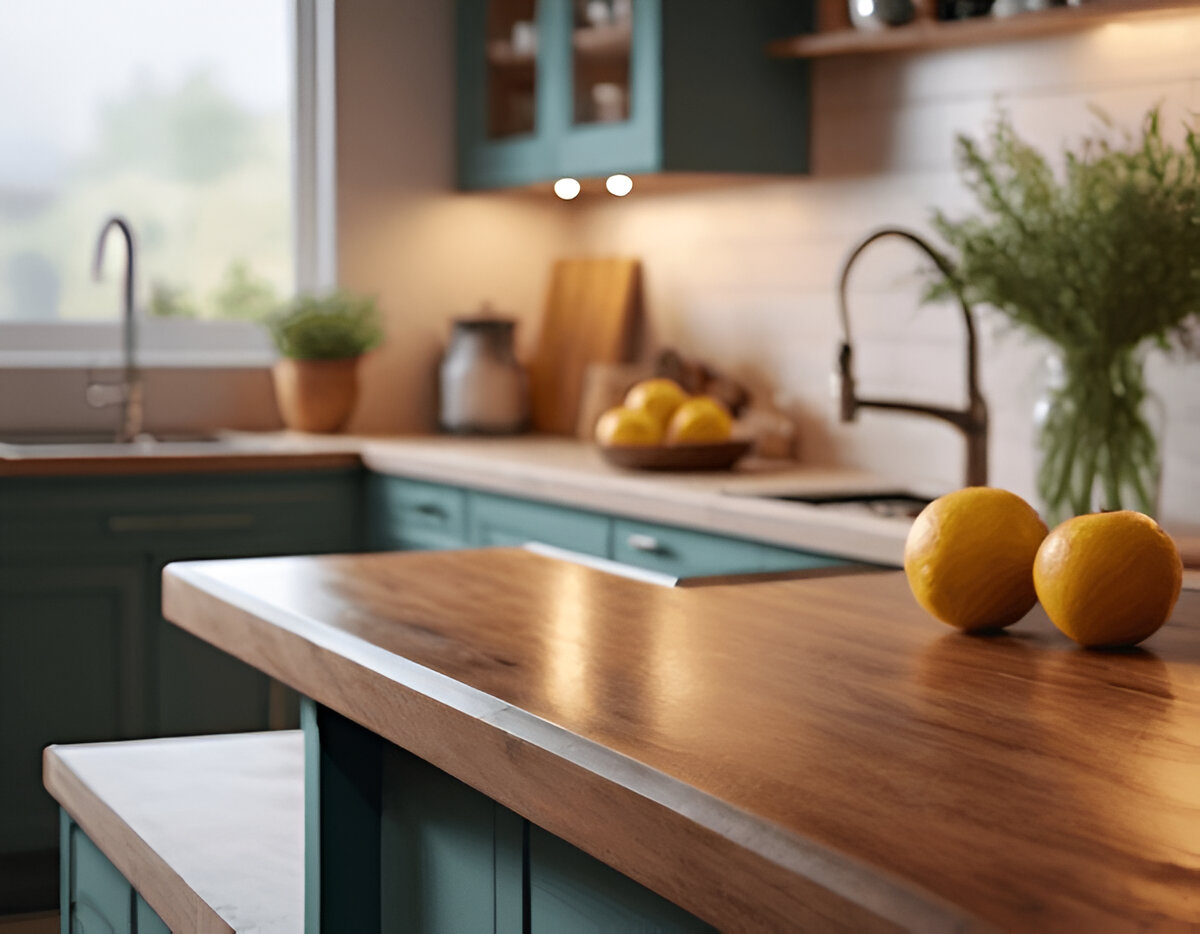

The rustic kitchen island is having a quiet moment. Not the over-distressed, faux-aged version that flooded design feeds a decade ago, but something more honest. Reclaimed timber with real history. Stone bases. Live-edge slabs that still show where the tree was. Hammered copper that develops a patina over years instead of being sprayed to look old on day one.
Writing in early 2026, designers at Homes & Gardens, Better Homes & Gardens, and Studio McGee have all signaled the same shift. Rustic in 2026 is grounded, calm, and material-led. The “Modern Western” and “Mountain Home” trends both sit inside this larger movement back toward authentic, tactile materials and earth-toned palettes. The 2026 Houzz Kitchen Trends Study confirmed it from the homeowner side: wood-toned cabinetry overtook white this year for the first time, claiming 29 percent of renovating homeowners.
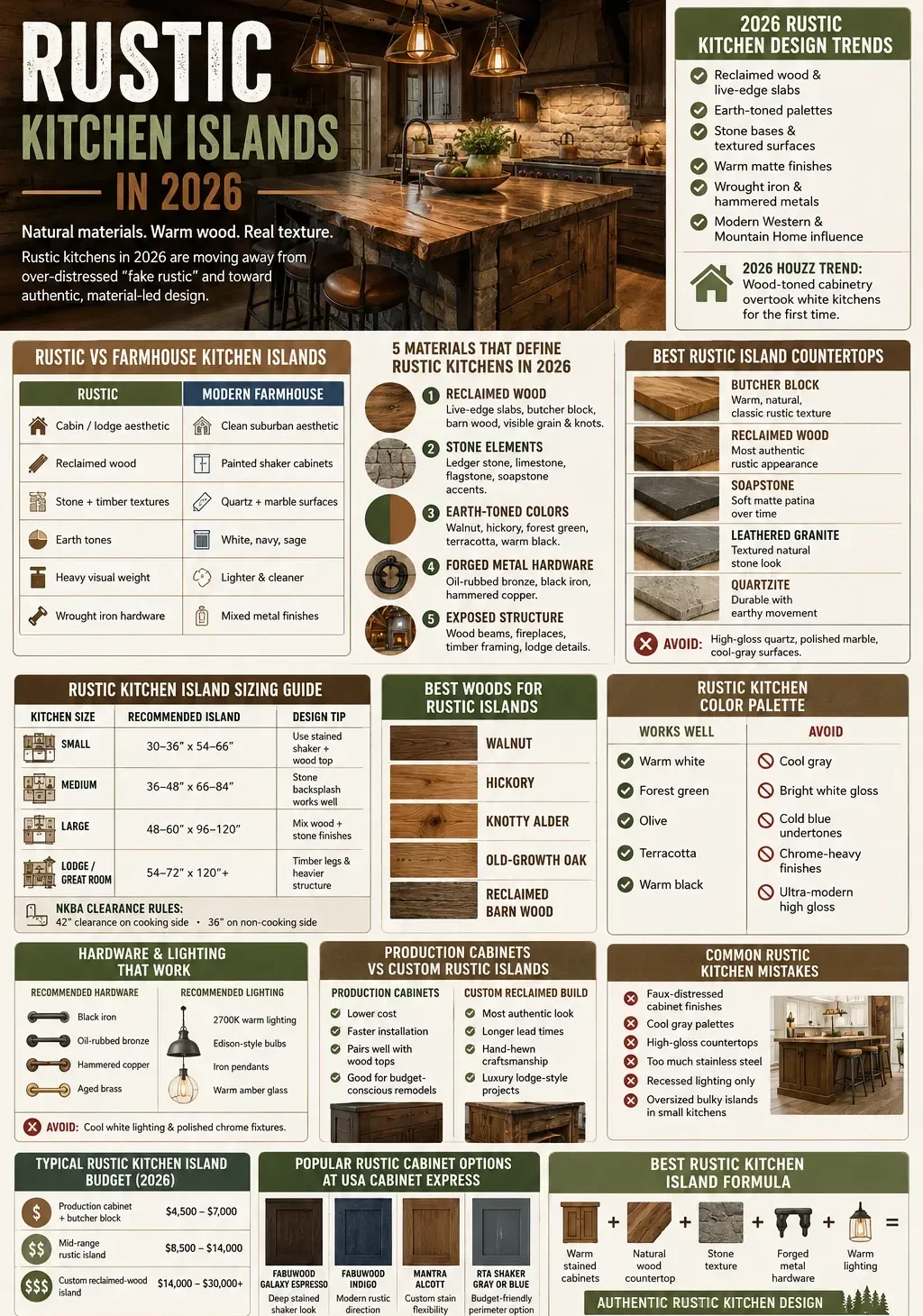
At USA Cabinet Express, we build rustic islands for cabin retreats, mountain homes, lake houses, and character properties where the rest of the architecture supports the look. This guide covers what reads as authentic rustic in 2026, the materials that actually hold up, and where the cabinet line you choose makes or breaks the build.
Rustic or Farmhouse? Two Different Aesthetics, Two Different Builds
The vocabularies overlap and the photo searches confuse them constantly, but rustic and farmhouse are different design languages and require different cabinet specifications. Picking the right one before you spec anything saves both money and rework.
Rustic is what this article covers. It is reclaimed and weathered wood, distressed or hand-hewn finishes, stone bases and live-edge tops, wrought-iron and hammered-metal hardware, an earth-toned palette of browns, deep greens, and warm neutrals. The look reads cabin, lodge, mountain home, log home, or character property. Heavier proportions. More texture. The island is meant to feel like it has always been there.
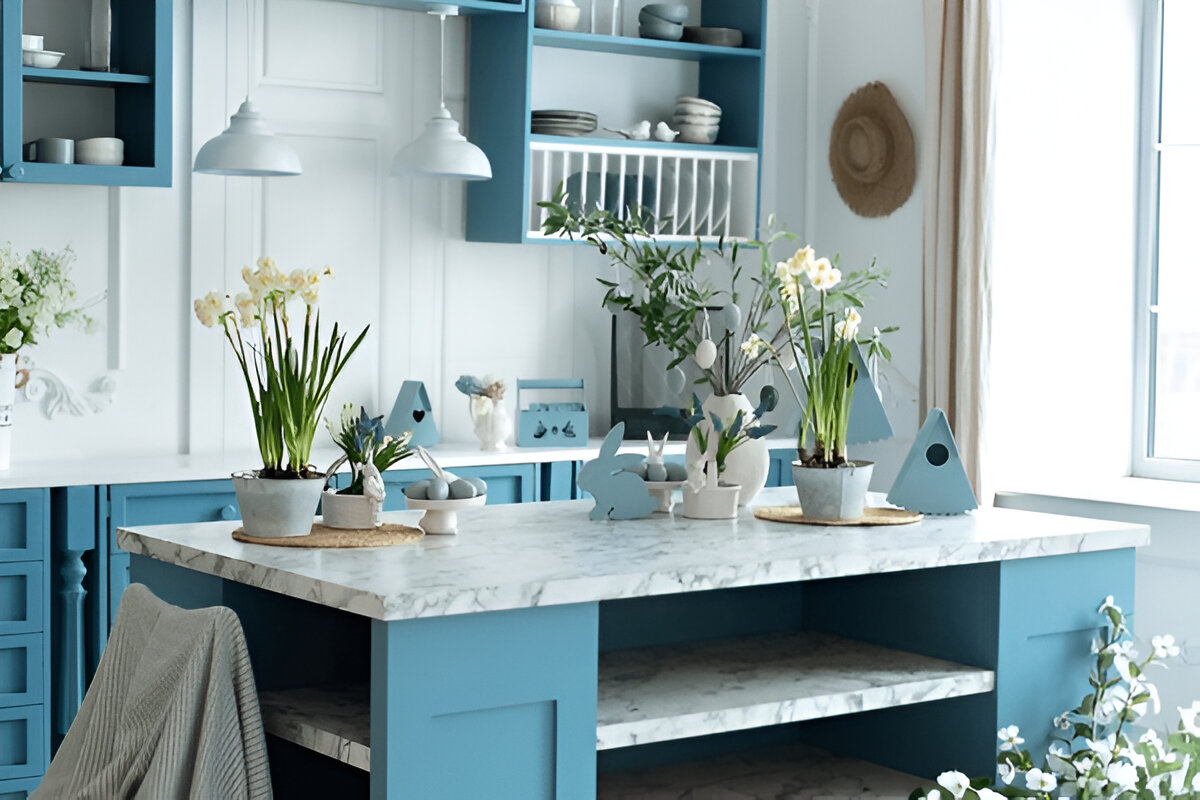
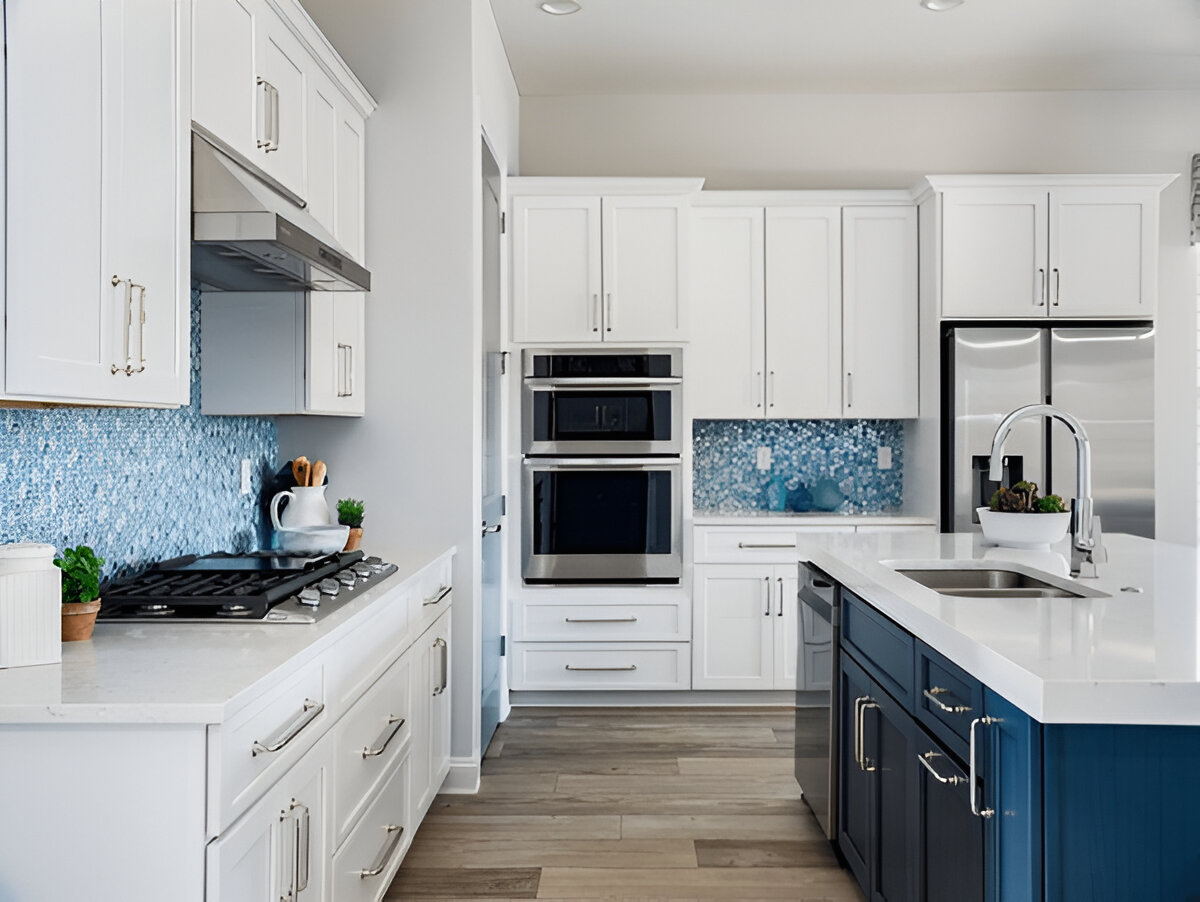
Modern farmhouse is a different direction. White or cream perimeter cabinetry with a contrast island in navy, sage, or dusty blue. Shaker doors. Apron-front sink. Quartz or marble countertops. Matte black and brass hardware. The look is light, family-oriented, and clean. Suits suburban new builds and transitional homes. If that direction sounds closer to your kitchen, our modern farmhouse kitchen island guide covers it in detail.
A rustic island can include shaker doors and a farmhouse sink, but the finishes, palette, and supporting materials carry it firmly in the cabin direction. The rest of this guide assumes you are building rustic.
The Five Material Moves That Define a Rustic Island in 2026
Rustic design in 2026 is material-led. The cabinet finish and the surrounding materials carry the look. Hit these five and the island reads correctly without needing decorative props to fake the aesthetic.
- Real or convincing reclaimed wood on at least one major surface. Either the island base, the countertop, or the open shelves above. Visible grain, knots, and tone variation are the point. Production cabinets in stained finishes like Fabuwood Galaxy Espresso work when paired with a reclaimed-wood top.
- Stone, either as a base panel or a backsplash anchor. Stacked ledger stone, split-face limestone, or large-format flagstone all carry the look. Stone on the island itself is a heavier move and reads more lodge than cabin.
- An earth-toned palette. Warm browns, deep forest greens, terracotta, oxblood, weathered black, hickory. Cool grays do not belong in a rustic kitchen. Bright whites read farmhouse, not rustic.
- Wrought iron, oil-rubbed bronze, or hammered copper hardware. Matte black works. Brass works in small doses. Polished chrome and brushed nickel do not. Antler chandeliers and iron pot racks are signature 2026 rustic features per Better Homes & Gardens.
- Exposed structure somewhere in the room. Beams overhead, a stone fireplace wall, or a corner of original log construction. The island echoes that structure. Without it, even a well-built rustic island can read out of context.
Sizing a Rustic Island: Heavier Proportions, Same Clearance Rules
Rustic islands tend to read heavier than their farmhouse counterparts because the materials are thicker. A 3-inch live-edge walnut top with a hand-hewn timber base looks substantial even at modest dimensions. That visual weight changes what works in your room.
The clearance rules do not change. The National Kitchen & Bath Association still calls for 42 inches between the cooking side of the island and the surrounding cabinetry, 36 inches on the non-cooking side. Below those numbers, the room becomes uncomfortable to work in regardless of style.
Where rustic islands differ is in the body proportions:
| Kitchen size | Recommended island width | Recommended length | Visual weight note |
|---|---|---|---|
| Small (under 150 sq ft) | 30 to 36 in | 54 to 66 in | Avoid full reclaimed-wood base; use stained shaker with a wood top instead |
| Medium (150 to 250 sq ft) | 36 to 48 in | 66 to 84 in | Full rustic base works. Pair with stone backsplash to anchor |
| Large (250 to 400 sq ft) | 48 to 60 in | 96 to 120 in | Mix materials: stained base, butcher block or live-edge top, stone end-cap |
| Great-room / lodge (400+ sq ft) | 54 to 72 in | 120 in and up | Hand-hewn timber legs read correctly at this scale. Anything smaller looks undersized |
For seating, allow the standard 24 inches of linear counter per stool and 12 to 15 inches of overhang at counter height. Heavy timber stools with leather or rawhide seats read correctly with rustic. Polished metal stools do not, even when the rest of the design is solid.
Countertop Choices That Carry Rustic Without Going Costume
The countertop is where most rustic builds either land or fall flat. Three options that work consistently in 2026:
Reclaimed wood or butcher block. The most direct route. A 2.5 to 3 inch thick walnut, oak, or hickory top in a wax or hardwax-oil finish reads as authentic rustic and develops character over time. Maintenance is real but manageable: a wipe-down with mineral oil every six months and a reseal every two to three years. Avoid on the side of the island that takes a kitchen sink unless you want to commit to constant maintenance.
Soapstone. The dark, soft-veined natural stone that defined American farmhouse and cabin kitchens for a century. Heat-resistant, knife-friendly, develops a patina with use. Premium pricing but the visual payoff is significant. Particularly strong on a stained cabinet base.
Honed (not polished) granite or quartzite in a leathered finish. The matte, slightly textured surface of leathered stone reads rustic where polished stone reads transitional. Earth-toned granites with movement (verde or brown-toned slabs) work especially well. Avoid the busy multi-color granites that read 2005.
The two countertop options to avoid on a rustic island in 2026: polished white marble (reads too clean and breaks the palette) and high-gloss quartz with bright veining (reads modern, fights the rest of the room).
Cabinet Specs: Stained Production Cabinets Versus Custom Reclaimed
Two viable paths for the island base, each with different cost and timeline implications.
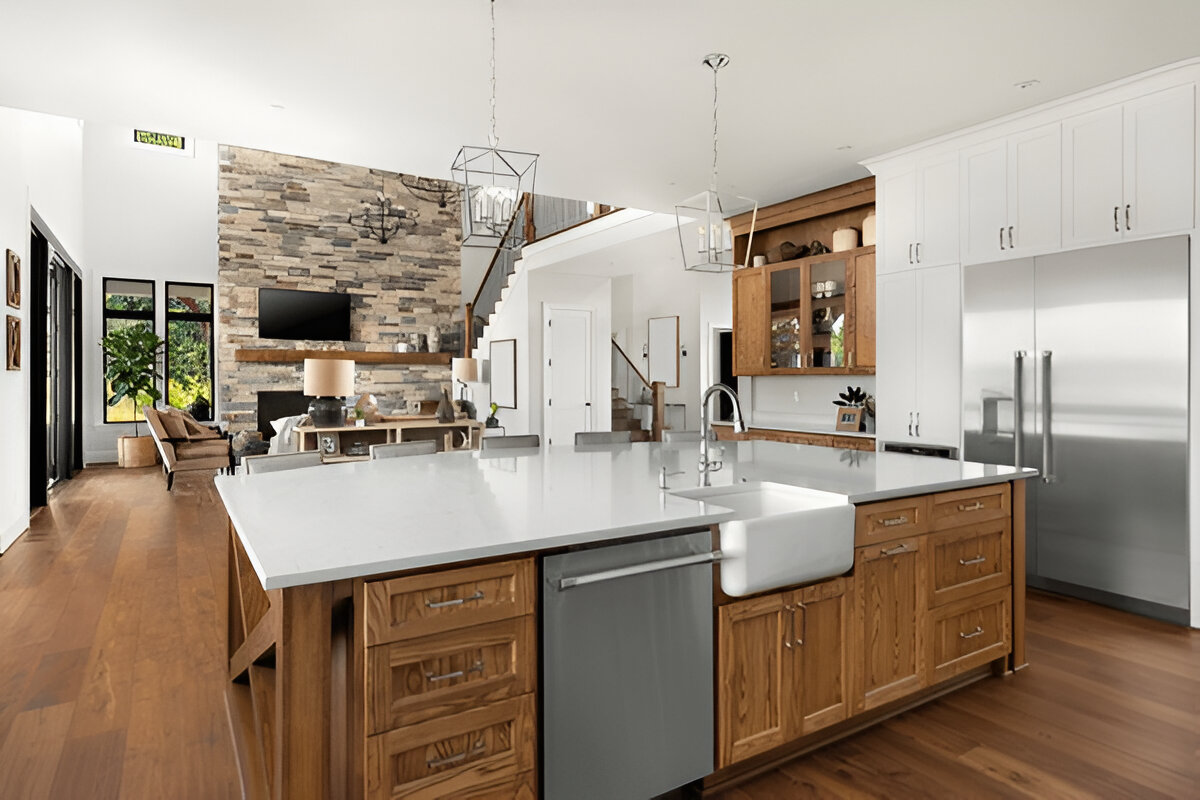
Path one: stained production cabinets with a feature top. The cost-controlled route. A standard shaker or recessed-panel cabinet base in a dark stained finish carries the work of the lower half of the island. The top, whether butcher block, soapstone, or leathered granite, plus the hardware and the surrounding stone work, carry the rustic identity.
Fabuwood Galaxy in Espresso is the production finish we spec most often for this path. Authentic shaker profile, all-plywood construction, dovetail joinery, Blum soft-close hardware. KCMA-certified. Stock at all seven of our showrooms with 5 to 7 day delivery. Roughly half the cost of custom and substantially faster to install.
For homeowners who want a slightly more refined rustic look, Mantra Alcott in a custom stained finish through MasterBrand’s color program works well. 1 to 3 week lead time. Solid wood frames and broader stain options than the production lines, including knotty alder and hickory.
Path two: custom reclaimed-wood island. The character route. A local woodworker fabricates the island base from genuine reclaimed barn timber, with hand-hewn legs, exposed joinery, and a top milled from the same lot. This is the path that delivers the most authentic look and the most expensive bill. Budget 2 to 4 times the cost of a production cabinet build, plus 6 to 12 week lead times.
The pragmatic compromise we recommend for most rustic builds: production cabinets on the perimeter (Galaxy Espresso, Mantra Alcott stained, or similar), and a custom reclaimed-wood island as the room’s character piece. The contrast between the two reads more authentic than going custom across the entire kitchen, and the budget stays under control.
Hardware and Lighting: The Two Details That Make or Break Rustic
Two areas where small choices have outsized impact.
Hardware. Wrought iron, oil-rubbed bronze, hammered copper, or aged brass. Pulls should look forged, not stamped. Cup pulls work on drawers. Black iron strap hinges read as cabin and read as rustic, but only when paired with doors heavy enough to carry them. On lightweight production doors, strap hinges look like costume jewelry.
Lighting. Three rules for rustic island pendants in 2026: warm color temperature (2700K, not 3500K), visible filament or amber-tinted glass, and metal finishes that match the cabinet hardware. Antler chandeliers work in true lodge homes and look forced anywhere else. Iron-banded pendants and Edison-bulb fixtures both work reliably. Pendant spacing follows the same rule as farmhouse: 20 to 36 inches apart, three above a standard-length island.
Where USA Cabinet Express Fits Into a Rustic Build
Two of our three cabinet lines support rustic builds well, and the third can work in specific configurations.
Fabuwood Galaxy covers the stained-shaker direction. Galaxy in Espresso is the workhorse rustic finish: deep brown stained shaker, all-plywood box, dovetail drawers, soft-close. Indigo also works on a rustic island where the rest of the room leans modern-rustic rather than pure cabin. Both ship from any of our seven showrooms in 5 to 7 business days on standard orders. KCMA-certified, CARB2-compliant, AWI Premium Grade.
Mantra by MasterBrand in the Alcott door style accepts MasterBrand’s full stain palette, including knotty alder, hickory, and several walnut tones. This is the line we spec when a project needs a specific wood species or a deeper, more characterful stain than Galaxy offers. 1 to 3 week lead time.
RTA Shaker in the Gray or Blue option can work as a perimeter base if the island carries the rustic identity through reclaimed wood and a stone backsplash. Not our first recommendation for a true rustic build, but a viable budget path when the island is doing most of the visual work.
A typical mid-range rustic build through us pairs Galaxy Espresso on the perimeter with either a stained Mantra Alcott island base or a custom reclaimed-wood island. Butcher block or leathered granite top. Soapstone backsplash. Oil-rubbed bronze hardware. The combined cabinet spend usually lands between $9,000 and $16,000 for a mid-size kitchen.
Common Mistakes That Pull a Rustic Island in the Wrong Direction
- Faux-distressed factory finishes. Catalogued “weathered” or “antique” paint finishes age poorly and read as costume on day one. If you want distressed, either go custom with real reclaimed wood, or choose a clean stained finish and let it age naturally.
- Cool gray on a rustic island. The cool-gray island that worked for farmhouse builds in 2018 does not translate. Rustic palettes are warm. Browns, greens, warm blacks, oxblood, terracotta. Cool grays kill the warmth the rest of the room is trying to deliver.
- Polished stone countertops. A high-gloss polished granite or marble top fights every other material in a rustic kitchen. Honed, leathered, or naturally matte finishes only.
- Recessed lighting as the primary source. Spec recessed cans as supplemental only. Pendants, sconces, and chandeliers with visible warm-bulb light should carry the room.
- Stainless steel appliances without a panel or hood treatment. Full stainless across the appliance package can read jarring in a rustic build. Either spec panel-ready refrigerator and dishwasher, or pair stainless with a substantial custom range hood in wood or hammered metal to break up the visual run.
Frequently Asked Questions for Rustic Kitchen Islands
What is the difference between a rustic and a farmhouse kitchen island?
A rustic kitchen island leans more cabin, lodge, mountain home, or country retreat. Think reclaimed wood, weathered finishes, stone bases, earth-toned palettes, wrought-iron hardware, heavier proportions, and visible texture. A modern farmhouse kitchen island is usually cleaner: shaker doors, painted finishes, apron sinks, navy or sage island colors, white perimeter cabinets, and mixed-metal hardware. Rustic feels more raw and material-led; farmhouse feels more polished and family-friendly.
Is a rustic kitchen island still in style in 2026?
Yes, but the look has changed. Rustic kitchen design in 2026 is less about heavy distressing and more about natural warmth, real texture, and earthy materials. Warm wood cabinetry, natural finishes, softer colors, and tactile surfaces are all appearing in 2026 kitchen trend reporting. What feels outdated is the overly distressed, dark Tuscan-style rustic kitchen from the early 2000s. Modern rustic is calmer, cleaner, and more intentional.
What wood works best for a rustic kitchen island?
Reclaimed barn wood, old-growth oak, walnut, hickory, and knotty alder all work well for a rustic kitchen island. Reclaimed wood gives the most authentic aged character, while walnut and hickory create a rich, durable look without requiring fully custom reclaimed stock. For production cabinetry, dark stained shaker, knotty alder, walnut stains, and espresso finishes can create a rustic island base at a more controlled budget.
Does a rustic kitchen island need to be reclaimed wood?
No. A rustic island does not have to be fully built from reclaimed wood. A stained cabinet base paired with a butcher-block, reclaimed-wood, soapstone, or leathered-stone countertop can still read as authentic rustic. This approach often costs less than a fully custom reclaimed-wood island while still delivering the warmth and texture homeowners want.
What countertop is best for a rustic kitchen island?
The best countertop options for a rustic kitchen island are butcher block, reclaimed wood, soapstone, leathered granite, and quartzite in warm earth tones. Butcher block gives the most direct rustic look. Soapstone works well because it has a matte surface and develops patina over time. Leathered granite and quartzite add durability while keeping the surface natural and textured. Highly polished marble or bright, high-gloss quartz can feel too formal for a rustic island.
Is butcher block good for a rustic kitchen island?
Yes. Butcher block is one of the strongest choices for a rustic kitchen island because it adds warmth, texture, and a natural work-surface feel. It pairs especially well with painted perimeter cabinets, dark-stained island bases, stone backsplashes, and black or aged-brass hardware. The tradeoff is maintenance: butcher block needs sealing and more care around water, stains, and heat than stone surfaces.
Can a rustic kitchen island work in a small kitchen?
Yes, but scale matters. In a small kitchen, rustic design works better through material details rather than oversized timber construction. A slimmer stained island, butcher-block top, open shelving, or antique-style hardware can create a rustic feel without making the room look heavy. Avoid bulky legs, thick stone bases, or very dark finishes if the kitchen has limited natural light.
What colors work best with a rustic kitchen island?
Warm whites, cream, sage green, olive, mushroom, taupe, charcoal, navy, forest green, and warm black all pair well with a rustic kitchen island. The goal is to support the wood tone rather than compete with it. Recent design coverage also points to earthy tones and rich natural colors as strong partners for wood cabinetry in 2026.
Should a rustic kitchen island match the cabinets?
Not necessarily. A rustic kitchen island often looks better when it contrasts with the perimeter cabinets. For example, white or cream cabinets with a dark-stained wood island create a classic rustic-farmhouse balance. A walnut or hickory island can also add warmth to a kitchen with painted shaker cabinets. Matching all cabinets can work, but contrast usually makes the island feel more intentional.
What hardware looks best on a rustic kitchen island?
Black iron, oil-rubbed bronze, aged brass, pewter, and antique nickel all work well on a rustic kitchen island. Cup pulls, simple knobs, exposed hinges, and larger bar pulls can all support the look. For a cleaner modern rustic style, choose simple hardware with a matte or aged finish instead of overly decorative scrollwork.
How much does a rustic kitchen island cost in 2026?
A production-cabinet rustic island with a stained base and butcher-block top may run roughly $4,500 to $7,000 installed, depending on size, cabinetry, labor, and location. A mid-range island with a custom-stained base, leathered granite, quartzite, or stone detailing may fall around $8,500 to $14,000. Fully custom reclaimed-wood islands with hand-hewn legs, live-edge tops, or specialty stonework can reach $14,000 to $30,000+.
What size should a rustic kitchen island be?
The right size depends on the kitchen layout, but most functional islands need enough room for prep, storage, and walkway clearance. A small rustic island can be around 4 feet long, while larger kitchens can support 7- to 10-foot islands with seating, storage, or a sink. The rustic style often uses heavier materials, so it is important to keep the island proportional to the room.
Can you add seating to a rustic kitchen island?
Yes. Seating works very well with rustic kitchen islands, especially when the island has a butcher-block top, overhang, or furniture-style base. Wood stools, leather stools, black metal stools, or woven seats all pair naturally with rustic materials. For comfort, the design should allow enough knee space and avoid placing bulky legs directly where people need to sit.
What backsplash goes with a rustic kitchen island?
Good backsplash choices include handmade-look tile, natural stone, zellige-style tile, brick veneer, soapstone, slate, or a warm neutral slab backsplash. The backsplash should support the island’s texture without making the kitchen feel too busy. If the island is already very heavy or dramatic, a simpler backsplash usually works better.
What is the best cabinet style for a rustic kitchen island?
Shaker, inset, beadboard, flat-panel wood, and furniture-style cabinet bases all work well for rustic kitchen islands. Shaker is the safest choice if the homeowner wants a rustic look that still feels current. Beadboard or furniture-style legs can add more country character, while slab or flat-panel wood doors can make the island feel more modern rustic.
How do you make a rustic kitchen island look modern?
Use rustic materials in a cleaner way. Choose real wood texture, matte stone, simple hardware, and a restrained color palette. Avoid overly distressed finishes, heavy corbels, ornate carvings, and too many competing materials. A modern rustic kitchen island should feel warm and natural, but still edited.
Plan Your Rustic Kitchen Island With USA Cabinet Express
Every USA Cabinet Express showroom stocks Fabuwood Galaxy in Espresso and Indigo, the two finishes that most often anchor a rustic island base. Mantra Alcott in custom stained finishes is available with a 1 to 3 week lead time. Our designers can spec a stained production cabinet build or coordinate with a local woodworker for a custom reclaimed-wood island.
Free design consultations are available at all seven locations.
Texas
Austin, 2112 Rutland Dr #185, Austin, TX 78758. Call (469) 336-9201.
Dallas. Call (469) 990-2200.
Houston. Call (281) 306-6060.
Virginia
Chesapeake, 1543 Sams Cir, Chesapeake, VA 23320. Call (757) 296-6669.
Fairfax (visit usacabinetexpress.com for hours).
Fredericksburg. Call (540) 515-1500.
Missouri
St. Louis, 2605 S Hanley Rd, Saint Louis, MO 63144. Call (314) 900-0440.
Browse the full Fabuwood collection, Mantra by MasterBrand line, or visit your nearest showroom to see Espresso and the available stained finishes in person.