
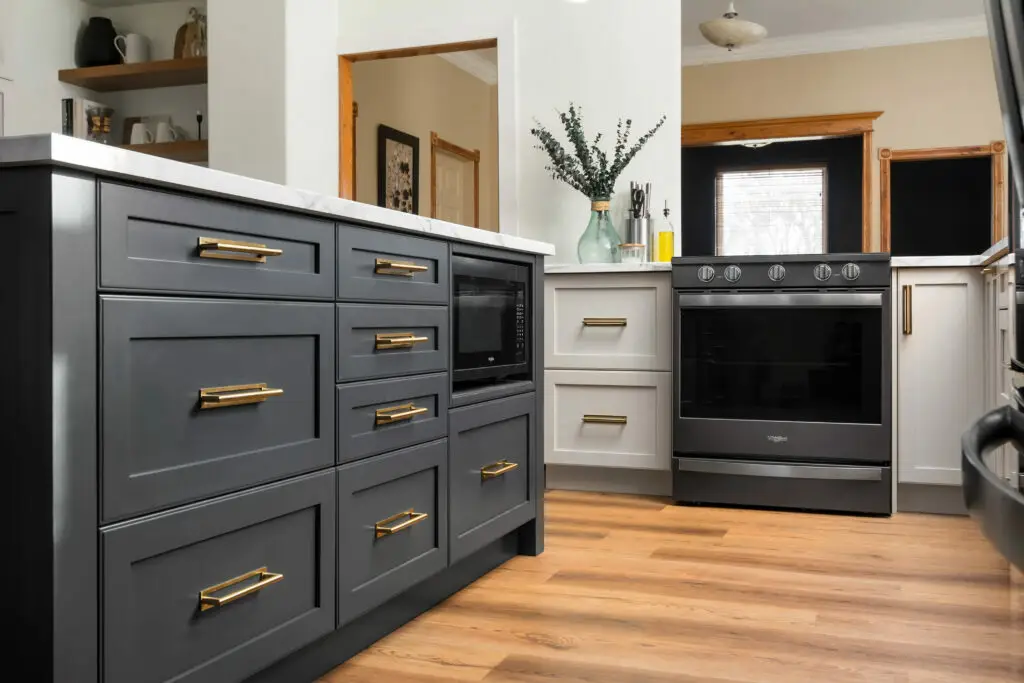

You are standing in front of a base cabinet, on one knee, pulling out half your cookware just to reach the Dutch oven hiding in the back. If that sounds familiar, you have already discovered the single most debated decision in any kitchen build: do you put drawers or doors below the counter? It is one of the most common questions remodelers, builders, and homeowners bring to our showrooms, and the honest answer is not “one or the other.” It is knowing exactly where each one wins.
Whether you call it drawers vs door cabinets or simply drawers vs doors, the choice between a drawer base cabinet and a door base cabinet shapes how your kitchen feels every day. This guide breaks down the real differences in access, capacity, cost, durability, and accessibility, with guidance from kitchen designers and current industry data, so you can spec a kitchen that actually works the way you cook.
Key Takeaways
- For base (lower) cabinets, drawers usually win, full-extension drawers bring everything to you in one pull, instead of forcing you to bend and dig.
- Doors still earn their place for tall, bulky, or awkward items: stand mixers, sheet pans, trash pull-outs, and the under-sink zone.
- Drawers cost more. Expect roughly a 20–40% premium on most lines, and more for wide drawer banks, but they tend to last longer.
- The best kitchens mix both. Designers zone the room: drawers in the prep and cooking area, doors where height and bulk demand it.
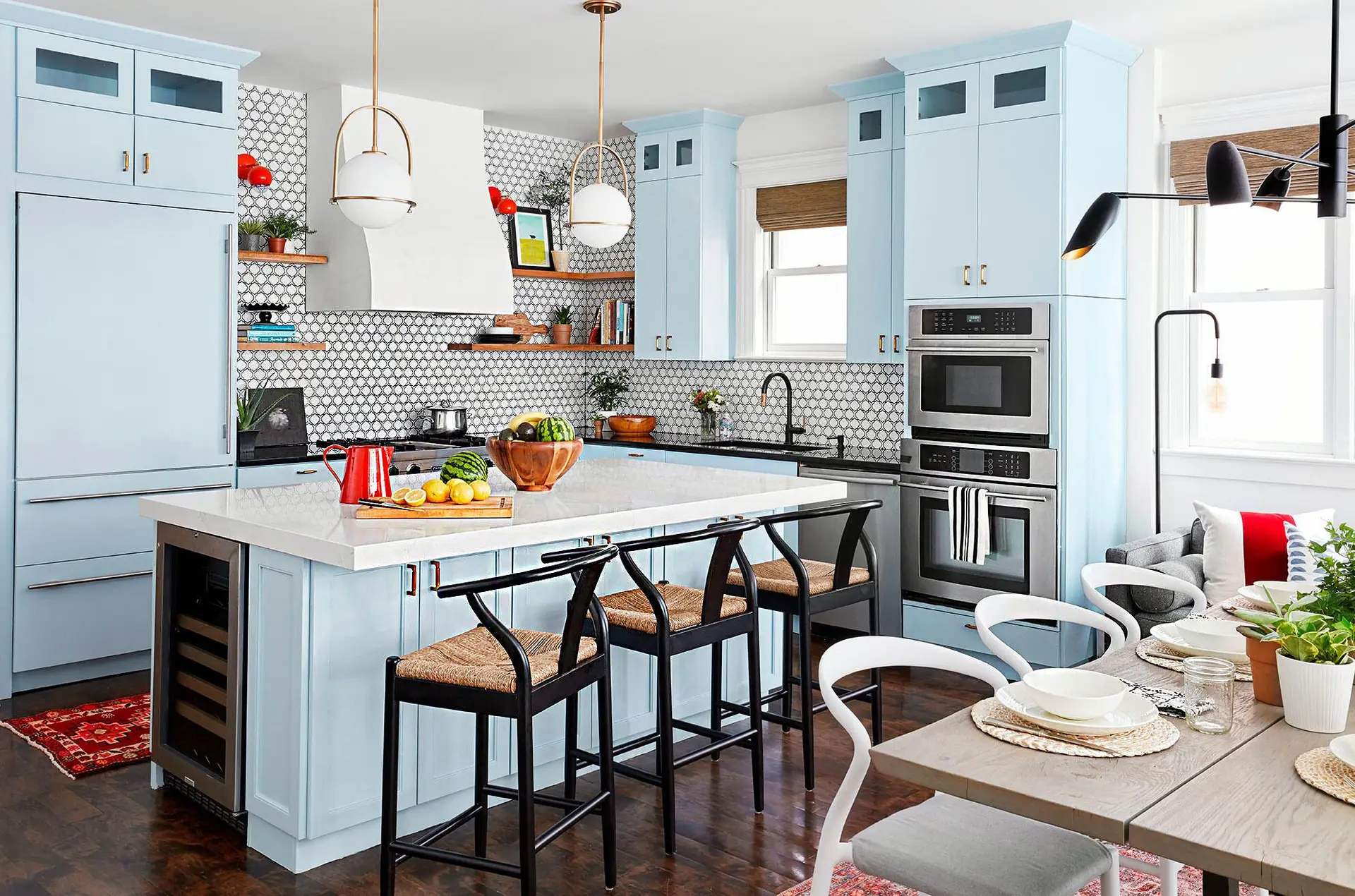
First, What Are We Actually Comparing?
When people say “cabinets vs. drawers,” they almost always mean base cabinets, the units that sit on the floor under your countertop. You have two main ways to build them:
- Door base cabinet: a hinged door (or pair of doors) opening to a deep box, usually with one or more fixed or adjustable shelves inside.
- Drawer base cabinet: a stack of drawers, commonly three or four, with no door at all.
The difference comes down to how you reach your stuff. With a drawer base, access is a single step: open the drawer, everything slides out toward you. According to Dean Cabinetry, a door cabinet, even one fitted with roll-out trays, is a two-step process: you open the doors first, then pull out the tray. That extra step, repeated dozens of times a day, is exactly why all-drawer bases have surged in popularity.
Drawers vs. Doors: Head-to-Head Comparison
| Factor | Drawer Base | Door Base |
|---|---|---|
| Access | One pull; contents come to you. No bending or reaching into the dark. | Two steps; back of the cabinet is hard to see and reach. |
| Best for | Pots, pans, lids, dishes, utensils, pantry goods, everyday items. | Tall & bulky items, small appliances, trash pull-outs, under-sink plumbing. |
| Usable capacity | Excellent organized capacity; every inch is reachable. | More open volume for oversized items, but back space often wasted. |
| Cost | Higher, more wood, hardware, and labor per unit. | Lower, simpler build, fewer moving parts. |
| Durability | Quality slides take heavy daily use well; often a longer lifespan. | Hinges and doors see more wear over time. |
| Look | Clean, streamlined, modern lines. | Classic; grounds traditional layouts and breaks up drawer rhythm. |
The Case for Drawers
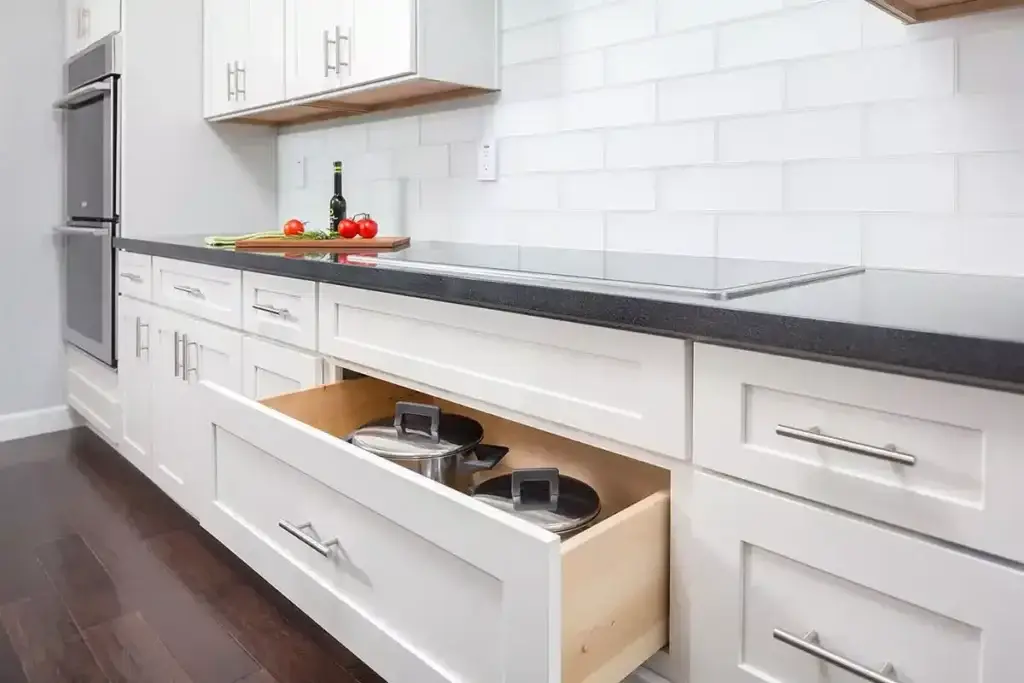
The biggest advantage is visibility. Unlike a deep cabinet, a drawer lets you see everything at once. As the designers at Arcadia Kitchen and Bath put it, you are not on your hands and knees pulling out half your cookware just to find one pot. Full-extension glides, soft-close hardware, and custom inserts turn what used to be awkward, low, hard-to-reach space into a smooth part of your workflow.
Modern drawer construction is also far stronger than it was a decade ago. According to design publication Livingetc, today’s drawers handle heavier objects and run smoothly, which is why base cabinets with drawers often provide better real-world storage for large or heavy kitchen items than doors do. Drawers shine wherever you reach often: the prep zone, the cooking zone, and everyday dishware.
Where drawers make the most sense
- Beside and under the range, pots, pans, and lids in deep drawers
- In the prep area for utensils, gadgets, and mixing bowls
- For dishware, many homeowners now store plates and bowls in drawers, not upper cabinets
- As a deep pantry drawer instead of a deep shelf where cans disappear to the back
Drawers and accessibility (aging in place)
There is also a universal-design advantage that is easy to overlook until you need it. Because a drawer brings its contents up and out to you, it removes the deep bending, kneeling, and blind reaching that a low door cabinet demands. For anyone planning an accessible or aging-in-place kitchen, or simply a kitchen that stays comfortable as the years go by, full-extension base drawers are far friendlier on the back, knees, and shoulders, and easier for kids and shorter cooks to use safely.
The Case for Doors
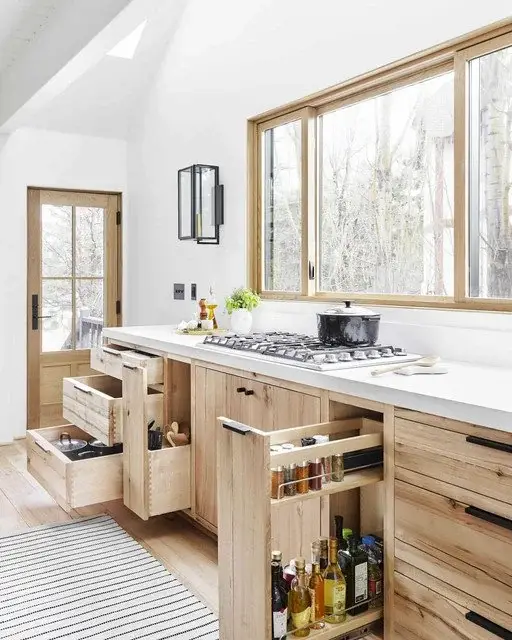
Doors aren’t second best here. They are simply better at a different job. According to Nelson Cabinetry, door bases offer generous open storage with the height and depth to tuck away appliances, stacks of bowls, or bulky pots until you need them. They are also the practical choice in two spots almost every kitchen has: the under-sink cabinet, where plumbing rules out drawers, and the cabinet that houses a pull-out trash and recycling center.
There is a design argument too. Too many drawer banks in a row can make a kitchen feel rhythmically off, especially in more traditional or transitional homes. A mix of door and drawer fronts keeps the cabinetry balanced and grounded.
Where doors make the most sense
- Under the sink (plumbing) and around the trash/recycling pull-out
- For tall, awkward items, stand mixers, sheet pans, cutting boards, small appliances
- In traditional kitchens where door fronts balance the overall look
- When budget is tight and you want maximum cabinetry for the dollar
What Do Drawers Cost vs. Doors?
Drawers cost more, and the reason is simple: more wood, more hardware, and more labor go into a drawer box than a door. How much more depends on the line and configuration.
| Cost factor | What to expect |
|---|---|
| Typical drawer premium | Industry estimates commonly land around a 20–40% upcharge for drawer systems vs. doors on the same line. |
| Wide / multi-drawer banks | Premium climbs for wide or all-drawer bases; some sources cite up to 60–100% more for full drawer bases of the same width. |
| Single example | A 3-drawer base can run roughly $300 more than a comparable door-and-top-drawer base. |
| Soft-close hardware | Roughly $40–$100 per drawer, averaging about $70, depending on the slide system. |
| The fair comparison | Once you add pull-out shelves to a door cabinet to match drawer access, the price gap narrows considerably. |
One thing builders and dealers should factor in when pricing a job: a door base loaded with roll-out trays can land close to a drawer base in cost. So the real question is less about “doors or drawers to save money” and more about “where one-step access is worth paying for.”

Are Drawers as Sturdy as Doors? The Durability Question
A common worry, especially for anyone comparing a swing door against a pull-out drawer, is whether drawers can take the abuse. With cheap hardware, the concern is valid. With quality full-extension, ball-bearing slides rated for the load, it largely disappears.
In fact, durability can favor drawers. According to Tecumseh Cabinet, drawers on well-installed slides withstand heavy, repeated opening and closing without the wear that doors and hinges accumulate over the years, which means the higher upfront cost can pay back as a longer service life. The keys are simple: choose full-extension slides, confirm the weight rating for what you plan to store, and buy from a line with solid drawer-box construction rather than stapled particleboard.
If your worry is that drawers will feel flimsy, the fix is in the spec sheet, not the concept. Look for a plywood cabinet box (typically 1/2″ or 5/8″) over thin particleboard or MDF, a dovetailed solid-wood drawer box, and undermount full-extension slides. Standard soft-close undermount slides are rated around 75–100 lb per drawer, and heavy-duty versions carry 250 lb or more, plenty for a drawer packed with cast iron. Match the slide rating to the load and a quality drawer will outlast the kitchen.
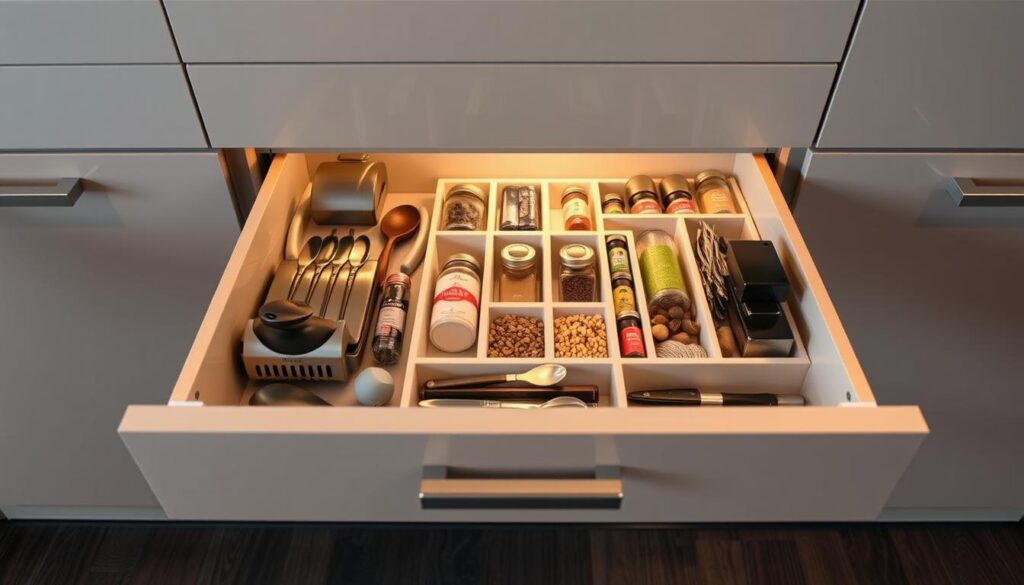
Drawers vs. Cabinets in a Small Kitchen
Small kitchens are where drawers can quietly transform a space. When every inch counts, the wasted dead zone at the back of a deep door cabinet is a real loss. Drawers make that depth fully usable, and in kitchens with limited wall space or big windows, a run of deep base drawers can even reduce how many upper cabinets you need.
The practical move in a compact kitchen: prioritize drawers in your busiest run, then keep doors for the under-sink unit and any tall-item storage. You get one-step access where you work most, without overspending on every single base.
What homeowners tell us after the remodel
In remodel after remodel, the most consistent piece of feedback we hear is the same: people wish they had put more drawers on the bottom and fewer doors. The second most common regret is the deep pantry that became a black hole, the fix is pull-outs or drawers, not deeper shelves. Almost nobody regrets choosing drawers; plenty wish they had chosen more of them.
The Designer’s Verdict: Don’t Pick Sides, Zone the Kitchen
Ask a professional and you will rarely hear “all drawers” or “all doors.” You will hear “it depends on how you actually live in the kitchen.” The smart approach is to zone the room:
- Prep & cooking zone (around the range and main counter): drawers, this is where one-step access pays off every day.
- Sink zone: a door base (plumbing) plus a tilt-out tray for sponges.
- Tall / bulky storage: a door pantry or appliance cabinet for the items drawers can’t hold.
- Visual balance: let a door or two break up long drawer runs in traditional kitchens.
Design for how you cook, not for a rule of thumb, and you will land on the right mix.
Frequently Asked Questions Drawers vs. Door Cabinets
Are drawers better than cabinets for a kitchen?
For lower (base) storage, drawers are usually the more practical choice because they bring contents to you in one pull instead of making you bend and dig. Doors still win for tall, bulky items and the under-sink area. The strongest kitchens use both, zoned by how you cook.
Do drawers cost more than door cabinets, and are they worth it?
Drawer bases typically run about 20–40% more than door bases on the same line, and full all-drawer bases can cost more again. Most homeowners who pay the premium say the daily one-step access makes it worth it, and once you add pull-out shelves to a door cabinet to match that access, the price gap shrinks.
Can drawers really hold heavy pots and pans?
Yes, when the hardware is right. Standard soft-close undermount slides are rated around 75–100 lb per drawer, and heavy-duty versions handle 250 lb or more, easily enough for a deep drawer of cast iron and stockpots. Just match the slide rating to the load.
Will cheaper drawers feel flimsy or wear out?
That worry usually comes from testing bargain units in a showroom. A drawer feels solid when it has a plywood cabinet box, a dovetailed drawer box, and full-extension undermount slides. Spec those three things and drawers tend to outlast doors, which wear at the hinges over time.
Do I lose storage space switching from doors to drawers?
No, you usually gain usable storage. A deep door cabinet wastes the space at the back where things disappear; a drawer makes the entire depth reachable. Inner or “hidden” drawers tucked behind a top drawer front add even more capacity without changing the look.
Drawers or doors for corner cabinets and under the sink?
Under the sink stays a door because of the plumbing, usually paired with a tilt-out tray for sponges. For corners, many people now skip the lazy Susan and run drawers in the adjacent cabinets instead, though a corner door or a specialized pull-out can still be the right call depending on your layout.
Are drawers good for small kitchens?
Very. Drawers make the full depth of a base cabinet usable, eliminating the wasted dead zone at the back of a deep door cabinet, a meaningful gain when every inch counts. A run of deep base drawers can even reduce how many upper cabinets you need.
Is it worth converting my existing door cabinets to drawers?
Often, yes, if the cabinet boxes are sound, drawers can be retrofitted in place of doors. It involves custom work and adds to the project scope, but switching your busiest lower run to drawers is the upgrade homeowners most often say they wish they’d made sooner. Ask our team to assess your boxes.
Get the Right Mix for Your Kitchen
Whether you are a homeowner planning a remodel, or a contractor, builder, or dealer specifying cabinetry for a project, the smartest kitchens balance one-step drawer access with the flexible volume of doors. At USA Cabinet Express, our team will walk your layout zone by zone and help you land on a configuration that fits how you cook, and your budget.
Contact USA Cabinet Express
Quality, style, and value. Visit a showroom near you or explore online at usacabinetexpress.com.
| Showroom | Address | Phone |
|---|---|---|
| Austin, TX | 2112 Rutland Dr #185, Austin, TX 78758 | (469) 336-9201 |
| Chesapeake, VA | 1543 Sams Cir, Chesapeake, VA 23320 (by appointment) | (757) 296-6669 · (757) 937-1737 |
| St. Louis, MO | 2605 S Hanley Rd, Saint Louis, MO 63144 | (314) 900-0440 |
| Dallas, TX | Dallas, Texas | (469) 990-2200 |
| Houston, TX | Houston, Texas | (281) 306-6060 |
| Fredericksburg, VA | Fredericksburg, Virginia | (540) 515-1500 |
Hours vary by location; the Chesapeake showroom is by appointment. Please call ahead to confirm availability.