
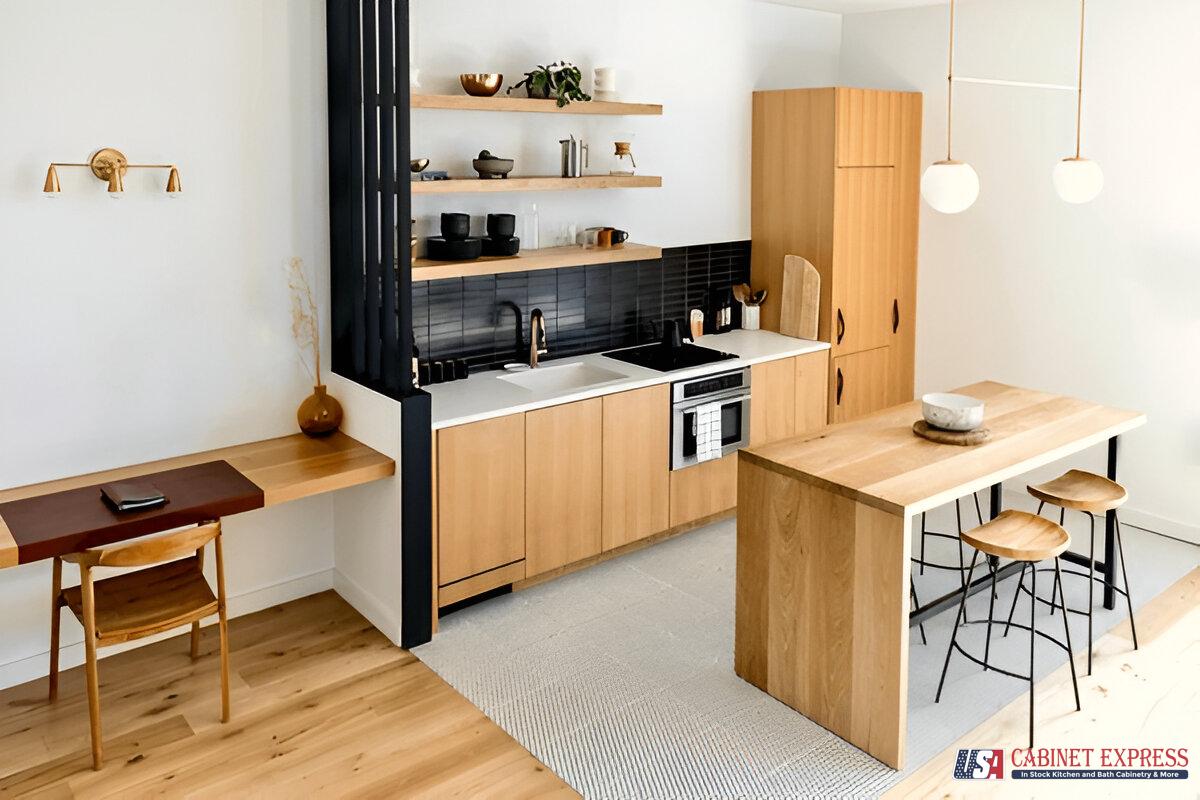

By Emin Halac, CEO of USA Cabinet Express. Updated October 2026.
Short answer. RTA kitchen cabinets are ready to assemble kitchen cabinets: they ship flat-packed with every panel, door and piece of hardware in the box, and you put the boxes together before installing them. A kitchen is built from three main cabinet types, base, wall and tall, in standard sizes, so planning comes down to measuring your walls and filling them with the right widths.
USA Cabinet Express keeps plywood RTA Shaker cabinets in White, Blue and Gray in stock at our showrooms for same-day pickup or scheduled delivery.
If you are pricing a kitchen, RTA cabinets are usually where the numbers start to make sense. You skip the factory assembly, the cabinets ship in smaller boxes, and you can often have them the same week instead of waiting on a made-to-order line. That is why both DIY homeowners and contractors running several kitchens at once use them.
This guide covers the practical side: what RTA cabinets are and what they are made of, the cabinet types and standard sizes, what a kitchen costs, how to measure and plan, and what to know about buying locally. If you want to know how to judge quality or which RTA cabinets are best, read our RTA cabinet reviews and buying guide.
What Are RTA Cabinets?
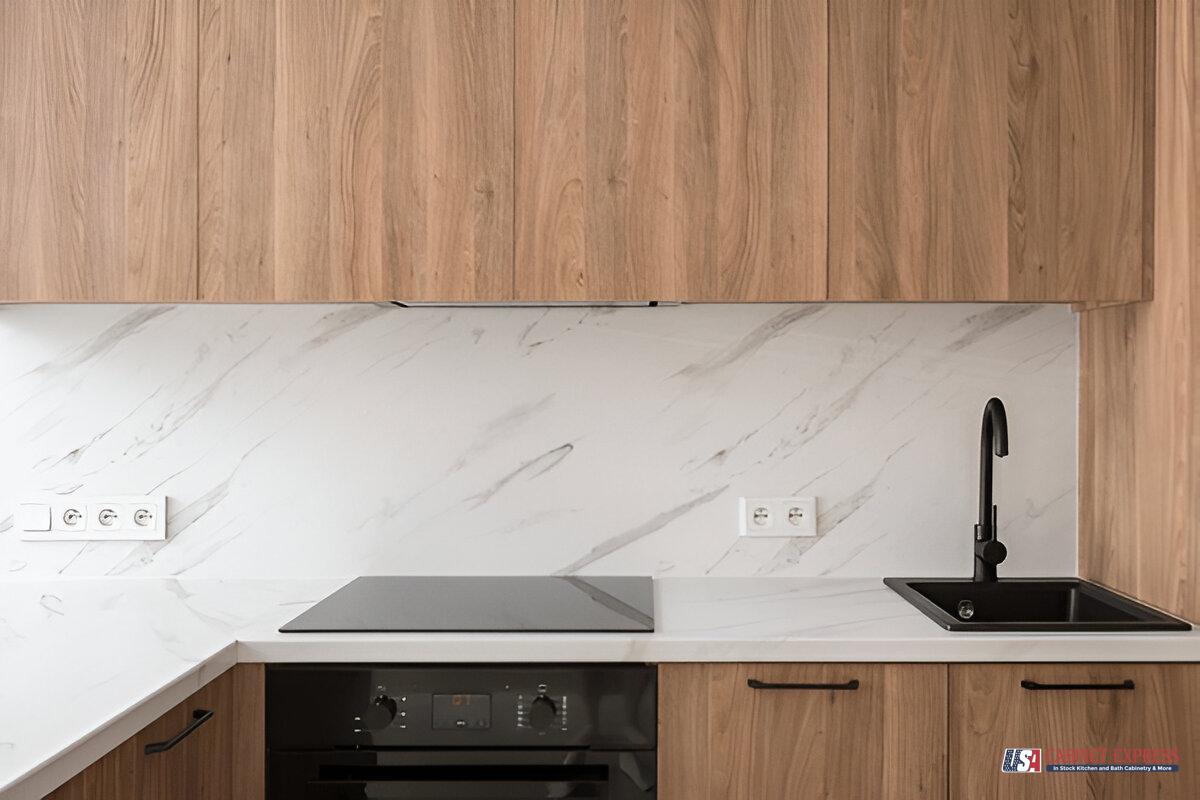
RTA stands for ready to assemble. Ready to assemble cabinets arrive as flat panels: sides, bottom, back, face frame or front, shelves, drawer parts and the doors, plus the clips, screws and hinges to put them together. You or your installer assemble each box, then hang and level the cabinets just like pre-assembled ones.
You will also see them called flat-pack cabinets, knocked-down (KD) cabinets or box cabinets. All of these names describe the same thing: how the cabinet ships.
The shipping format tells you nothing about quality on its own. A well-built RTA cabinet uses the same plywood box, dovetail drawers and soft-close hardware as a mid-range assembled cabinet. A cheap one uses particleboard and stapled drawers. The box material is the first thing to check.
Three things make RTA cheaper: no factory assembly labor, smaller boxes that cost less to ship and store, and stock lines that are made in volume instead of to order.
What RTA Kitchen Cabinets Are Made Of
Every RTA cabinet combines a few materials, and each one belongs in a different part of the cabinet.
- Plywood: thin wood layers glued in alternating directions. It holds screws and hinge plates well and handles kitchen humidity, which makes it the material to ask for in the cabinet box and shelves.
- Solid wood: used for face frames, door frames and drawer sides. Strong, and it can be sanded and refinished.
- MDF (medium-density fiberboard): a smooth, dense panel that takes paint well. It works as a center panel in painted doors, but it swells if water gets in.
- Particleboard: wood chips pressed with resin. The cheapest option and the weakest: once it gets wet it swells and loses its grip on screws, which is a real risk under a sink.
Watch the wording on product pages. “Engineered wood” or “wood composite” without the word plywood usually means particleboard, and “all wood” can describe the doors and frames while the box is something else.
Plywood RTA Cabinets: Our Shaker Kitchen Line
Our plywood RTA cabinets come from an RTA Shaker line we distribute in three colors, all kept in stock: Shaker White, Shaker Blue and Shaker Gray. Every cabinet in the line is built the same way. If you are deciding between the colors, our guides to kitchen cabinet door styles and gray kitchen cabinets can help.
What is in every cabinet
- Box: UV plywood construction, finished on both sides
- Doors: full overlay Shaker birch doors with a 5-piece drawer front
- Shelves: 5/8″ fully adjustable plywood
- Drawers: full-extension dovetailed drawer boxes in 5/8″ birch UV plywood
- Hardware: soft-close doors and drawers
- Format: flat-pack, ready to assemble
RTA Kitchen Cabinet Types: Base, Wall, Tall and Specialty
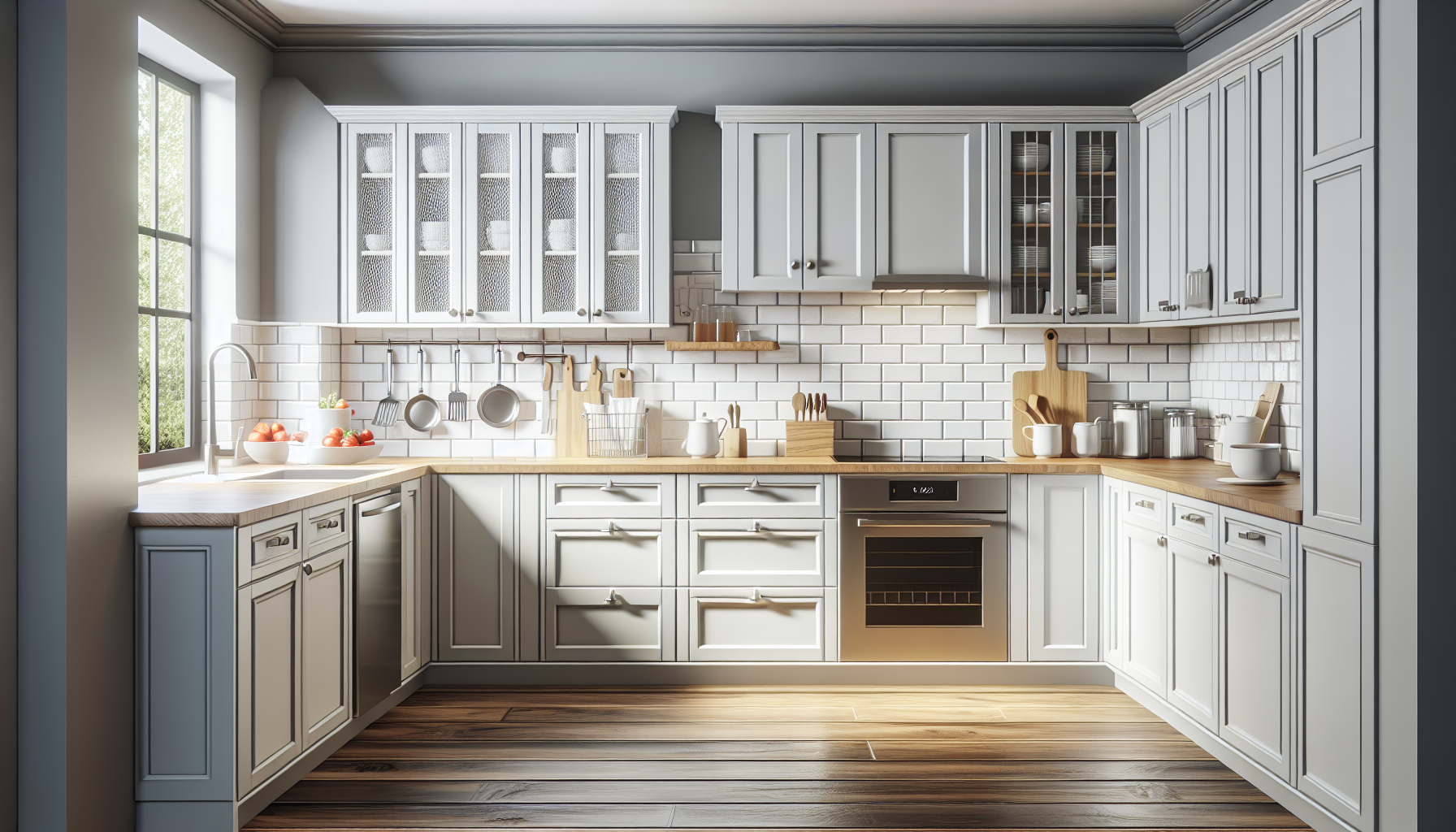
Every kitchen, RTA or not, is built from the same families of cabinets. Knowing the names makes a quote or a design plan much easier to read.
RTA base cabinets
Base cabinets sit on the floor and carry the countertop. The common versions are:
- Standard base: a drawer on top and doors with a shelf below.
- Drawer base: a stack of drawers, usually three. The most useful storage in the kitchen, and the slowest box to assemble.
- Sink base: doors with a false drawer front, and room at the back for plumbing.
- Corner base: a lazy Susan or a blind-corner cabinet where two runs meet.
RTA wall cabinets
Wall cabinets hang above the counter. They are shallower than base cabinets and come in several heights so you can match your ceiling, plus short versions for over the range hood or refrigerator. Wall cabinets are the quickest boxes to assemble, which makes them a good place to start.
RTA pantry cabinets and tall cabinets
Tall cabinets run from the floor up to the line of the wall cabinets. An RTA pantry cabinet replaces several small wall cabinets with one large, easy-to-reach space, and an oven cabinet houses a wall oven. Tall boxes are awkward to stand up once they are built, so many people assemble them upright, close to where they will go.
Fillers, panels and trim
These are the pieces most people forget to order. Fillers close the gaps between cabinets and walls and give doors and drawers room to open. End panels finish exposed cabinet sides. Toe kick covers the recessed base at the floor, and crown molding finishes the top of the wall cabinets. Order them together with the cabinets so the finish matches.
Standard Kitchen Cabinet Sizes for RTA Cabinets
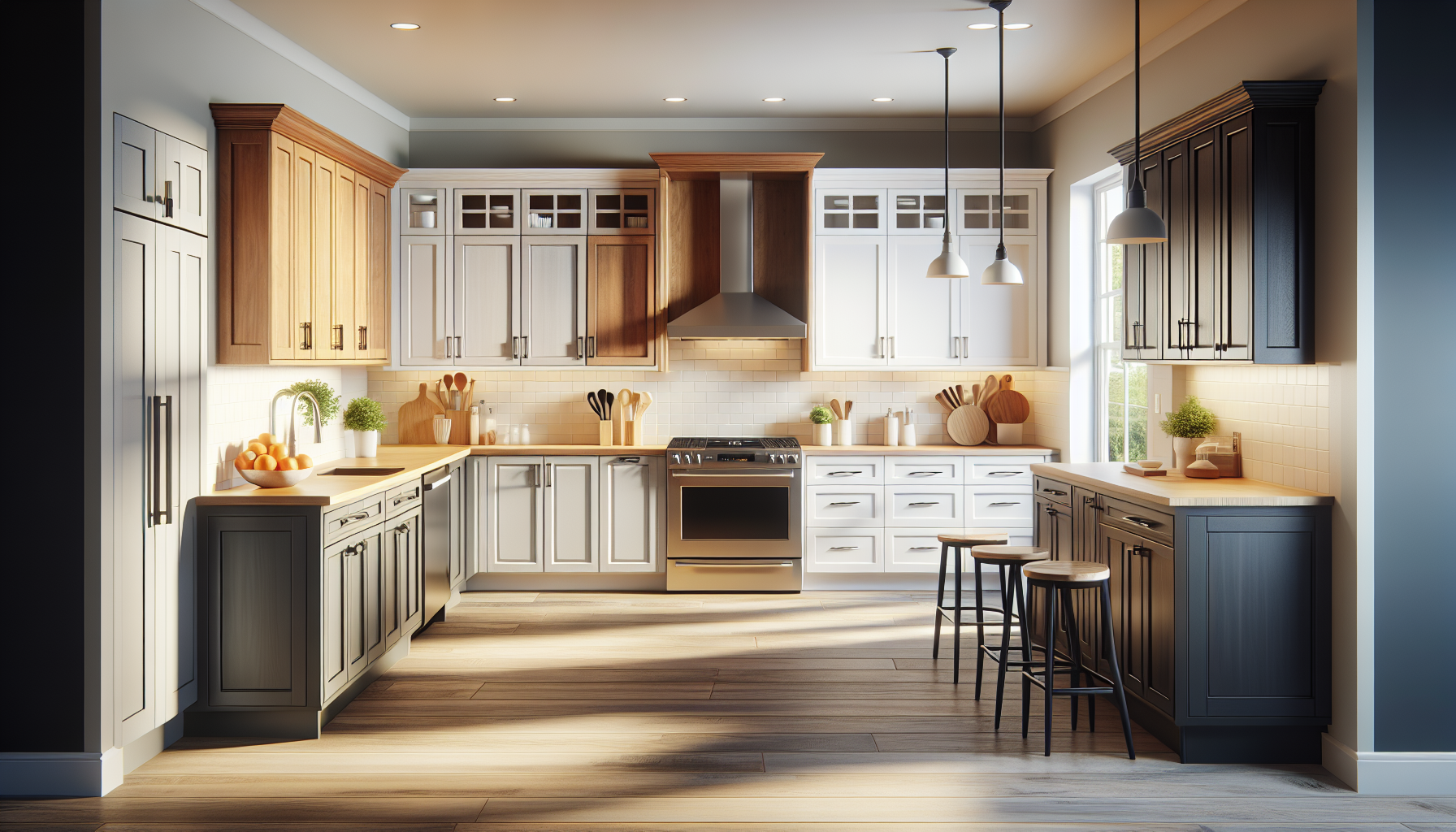
RTA lines follow the same standard kitchen cabinet sizes as assembled cabinets, so a layout drawn for one works for the other. Widths step up in 3-inch increments, which is why a plan rarely fits a wall exactly and fillers make up the difference.
| Cabinet | Height | Depth | Common widths |
|---|---|---|---|
| Base | 34.5″ (36″ with countertop) | 24″ | 12″ to 48″, in 3″ steps |
| Wall | 30″, 36″ or 42″ | 12″ | 12″ to 36″, in 3″ steps |
| Tall / pantry | Commonly 84″, 90″ or 96″ | 12″ or 24″ | Commonly 18″ to 36″ |
Industry-standard sizes. Exact sizes vary by line, so confirm the size list before you finalize a plan.
Most layouts mix a few common widths. For a sink base, the cabinet has to be wider than the sink bowl, so pick the sink first. For wall cabinets, the right height depends on your ceiling and whether you plan to add crown molding above them.
How Much Do RTA Kitchen Cabinets Cost?
RTA is one of the most affordable ways to buy a full set of real-wood kitchen cabinets, but “cheap RTA kitchen cabinets” and good ones are priced very differently. Typical 2026 ranges for a 10×10 kitchen, cabinets only:
| Cabinet type | 10×10 kitchen (materials) |
|---|---|
| Economy RTA (particleboard) | $1,200 – $2,500 |
| Plywood RTA | $2,800 – $5,000 |
| Stock pre-assembled | $3,500 – $6,500 |
Typical market ranges. Countertops, installation and accessories are extra.
Are RTA cabinets actually cheaper? For the same cabinet line, yes. In a typical like-for-like 10×10 comparison, RTA runs about $2,169 versus $2,682 pre-assembled, roughly $513 less before labor. Compare quotes in the same grade, plywood against plywood, and always ask for a delivered price.
Our RTA cabinets are sold at wholesale prices, and our Price Match Guarantee means that if you find a lower price, we will match or beat it. Bring your layout to a showroom for an itemized quote. For more price detail by cabinet grade, see the cost section of our RTA cabinet buying guide.
How to Measure and Plan an RTA Kitchen
- Sketch the room. Draw each wall that will get cabinets and mark doors, windows, outlets, plumbing and vents.
- Measure each wall at three heights. Walls are rarely straight, so measure near the floor, at counter height and near the ceiling, and use the smallest number.
- Measure the ceiling height in a few spots. It decides your wall cabinet height and whether crown molding fits.
- Locate the appliances. Note the width of the range, refrigerator and dishwasher openings. Appliances take wall space before any cabinet does.
- Fill the remaining space with standard widths, starting at the corners and working out. Leave room for fillers next to walls and appliances.
- Check door and drawer clearance at corners, next to the refrigerator and near any window trim.
Small kitchens need extra thought. A full-size pantry cabinet can be too big for a narrow wall, and some owners stack wall cabinets instead to get floor-to-ceiling storage in less space.
What “10×10 kitchen cabinets” means
A 10×10 kitchen is the standard layout the cabinet industry uses to compare prices: an L-shaped kitchen with 10 feet of cabinets on each of two walls. It is a useful yardstick, but your own price depends on how many base, wall, drawer and corner cabinets your walls need, and on the fillers and trim that finish them.
Buying RTA Kitchen Cabinets Online vs. Near You
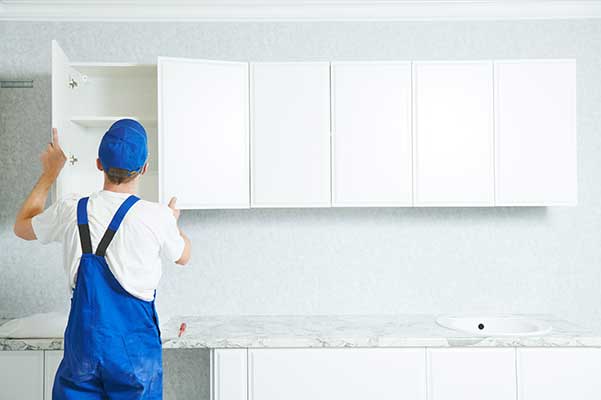
Buying RTA kitchen cabinets online is easy, but a whole kitchen ships as dozens of heavy cartons, and freight is where many online orders go wrong. The most common complaints are shipping charges added late, missing parts, and damage that is only found after the inspection window closes. Flat-pack boxes do travel better than built cabinets. As one homeowner on r/kitchenremodel put it, they are “less likely to be damaged coming flat packed.”
Buying from a showroom near you changes a few things:
- You see the product first. You can check the door, the box and the drawers before you buy.
- No freight surprise. You pick up the cartons or schedule a local delivery.
- Problems get fixed faster. A missing or damaged part is a trip to the showroom instead of a return shipment.
Our RTA Shaker cabinets are in stock for same-day pickup. If you would rather not haul them, we offer scheduled delivery with a pre-delivery inspection, notice the day before, and unloading on site. For more on shopping locally, see our guide to buying in-stock cabinets locally.
Assembling and Installing RTA Cabinets
Assembly takes patience more than skill. The first two or three boxes are slow while you learn the system, and then it speeds up. A few habits make the biggest difference:
- Inventory first. Open and count every carton the day it arrives, before you start building.
- Dry fit, then glue. Check that panels line up, then add wood glue to the joints for a box that stays tight for years.
- Check for square by measuring the diagonals of each box before the glue sets.
- Build tall cabinets upright near where they will stand. They can be too tall to tip up once assembled.
- Hang the wall cabinets first. A temporary ledger board screwed to the studs holds them level while you fasten them.
- Fasten into studs, never into drywall alone, and shim the base cabinets level before joining them.
Contractors are often surprised by good RTA. One homeowner who has remodeled three kitchens wrote that each time with RTA, “the GC is amazed at the quality and baffled at the cost.” For assembly times by cabinet type, see the installation section of our RTA cabinet reviews guide.
RTA vs. Assembled Cabinets: Mixing Both in One Kitchen
| Factor | RTA cabinets | Assembled cabinets |
|---|---|---|
| Cost | Lower | Higher (factory labor and bulkier freight) |
| Timeline | Add assembly time before install | Install starts on delivery |
| Effort | You or your installer builds each box | No assembly step |
| Storage and transport | Flat cartons, easy to carry and stack | Bulky boxes, more room needed |
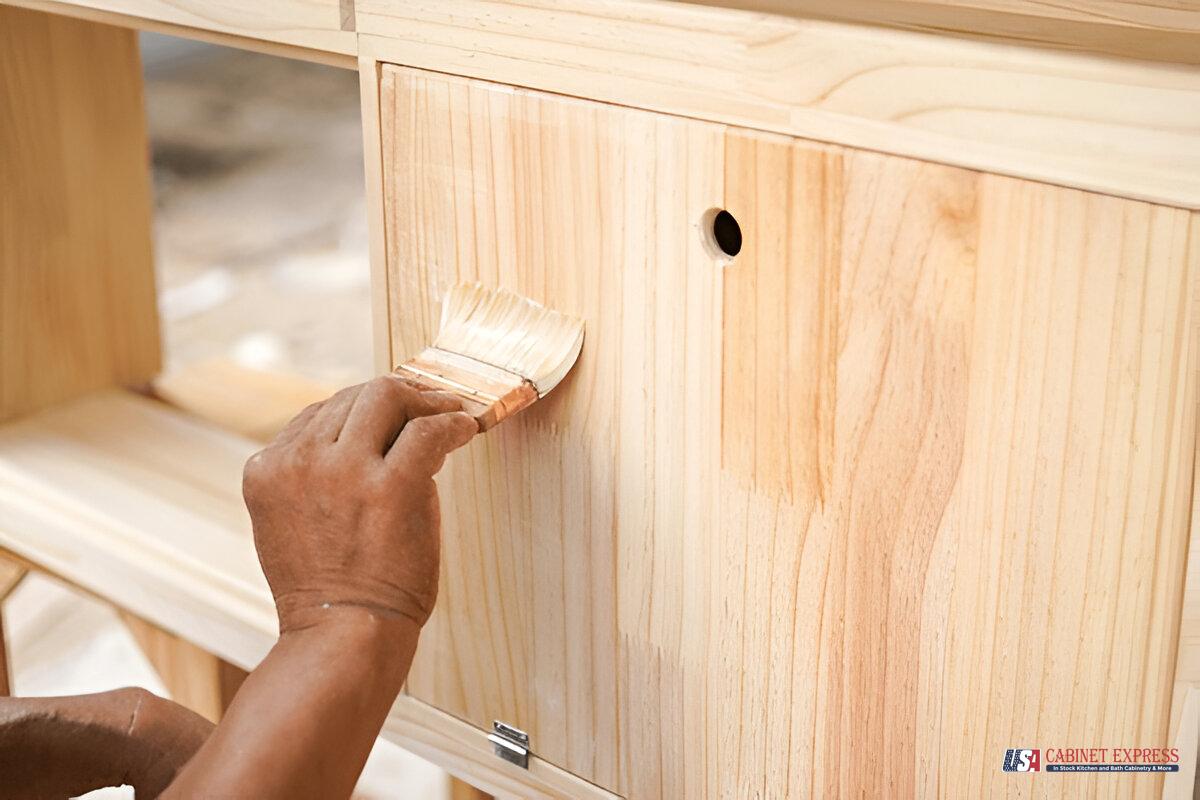
You do not have to choose one format for the whole kitchen. Many buyers use RTA for straightforward base and wall cabinets and buy the slow, fiddly pieces, such as corner cabinets and large drawer stacks, already assembled.
Alongside the RTA Shaker line, we carry assembled cabinets from Fabuwood, usually ready in 1 to 2 weeks, and Mantra (see our Mantra cabinets review). Those lines also cover what RTA cannot: more colors, more door styles, and modern flat-slab looks such as Fabuwood’s frameless Illume series.
RTA cabinets beyond the kitchen
The same base, wall and tall cabinets work in bathrooms, pantries and laundry rooms. A base cabinet with a countertop becomes a vanity, and wall cabinets above the washer and dryer add storage where most laundry rooms have none.
Listen: RTA Kitchen Cabinets Explained in 8 Minutes
Prefer to listen? In this episode, Chris and Jessica walk through everything on this page: what RTA cabinets are, plywood versus particleboard, standard sizes, what a 10×10 kitchen costs, and how to plan and assemble your cabinets.
Can’t see the video? Watch it on YouTube. Chapters: 0:57 materials · 2:16 cabinet types · 3:12 sizes · 3:52 costs · 4:35 planning · 6:01 assembly.
RTA Kitchen Cabinets: Frequently Asked Questions
What does RTA mean in cabinets?
RTA means ready to assemble. The cabinets arrive flat-packed with the panels, doors and hardware in the box, and you assemble each cabinet before installing it. They are also called flat-pack or knocked-down (KD) cabinets.
Are RTA cabinets real wood?
Many are, but not all. Better RTA cabinets use a plywood box with solid wood face frames and doors, while budget lines use particleboard. Our RTA Shaker cabinets use UV plywood construction, birch Shaker doors and birch plywood dovetail drawer boxes.
What are the three grades of cabinets?
Stock, semi-custom and custom. Stock cabinets come in fixed standard sizes and finishes and are the most affordable. Semi-custom cabinets let you change some sizes and finishes. Custom cabinets are built to order for your exact space. Most RTA cabinets are stock cabinets that ship flat.
What is the difference between RTA cabinets and custom cabinets?
RTA cabinets come in standard sizes from existing stock and you assemble them, so they are faster and cheaper. Custom cabinets are built to your measurements and arrive finished, so they cost much more and take longer. With RTA, fillers and panels make standard sizes fit your walls.
Can RTA kitchen cabinets be customized?
Within limits. You choose the cabinet sizes, the layout, the hardware and the trim, and fillers and panels let a standard line fit an odd wall. If you need special sizes, more colors or a different door style, pair RTA with an assembled line for those pieces.
Are RTA cabinets actually cheaper?
Yes, compared with the same cabinet bought assembled. A typical plywood 10×10 kitchen runs about $2,800 to $5,000 in RTA, and the same line costs roughly $500 more pre-assembled before labor. Compare quotes in the same grade, plywood against plywood.
How long do RTA cabinets last?
As long as assembled cabinets made from the same materials. The box material and moisture decide it: a glued plywood box kept dry lasts for many years, while particleboard near a sink can fail early. One owner on r/kitchenremodel reported their RTA cabinets had held up well after eight years.
Are 36-inch and 42-inch cabinets standard?
Yes. 36 inches is a standard width for base and wall cabinets and a standard wall cabinet height. 42-inch wall cabinets are also standard, and they are the usual choice for running wall cabinets up to an 8-foot ceiling.
Is 27 inches a standard cabinet size?
Yes. Cabinet widths step up in 3-inch increments, so 27 inches is a standard width alongside 24 and 30 inches.
Is a 30-inch cabinet actually 30 inches wide?
Yes. The listed width is the cabinet’s outside width, so a 30-inch cabinet takes up 30 inches of wall. Fillers, end panels and countertop overhang are extra, so leave room for them in your plan.
Which RTA cabinets work in a modern kitchen?
Shaker is the most flexible choice. Modern RTA kitchen cabinets in a five-piece Shaker style with a solid color and slim bar pulls look clean and current, which is why our Shaker White, Blue and Gray work in transitional and modern kitchens. For a true flat-slab look, an assembled frameless line is the better fit.
Can I install RTA kitchen cabinets myself?
Many homeowners do. You need a drill, a level, clamps, a stud finder, wood glue and patience. If you are not comfortable leveling and fastening cabinets to studs, assemble the boxes yourself and hire an installer to hang them.
How long does it take to get RTA cabinets?
Our RTA Shaker cabinets are in stock for same-day pickup, or we can schedule a delivery. Assembled Fabuwood cabinets usually take 1 to 2 weeks.
Can someone help me plan my RTA kitchen?
Yes. Bring your measurements to one of our showrooms and our team will help you plan the layout, including fillers, panels and trim. We also offer 3D design services so you can see the kitchen before you buy.
Where can I buy RTA kitchen cabinets near me?
USA Cabinet Express sells RTA kitchen cabinets at showrooms in Houston, TX; St. Louis, MO; and Chesapeake, Fairfax and Fredericksburg, VA. See our locations page for addresses.
Plan Your RTA Kitchen With Us
An RTA kitchen comes together in three steps: measure the room, fill the walls with standard base, wall and tall cabinets, then finish with fillers and trim. Start with a plywood line, order the trim with the cabinets, and inspect every carton when it arrives. Our Shaker White, Blue and Gray RTA cabinets are in stock now. Visit one of our showrooms with your measurements, or request a project quote online.
Ready to Plan Your Kitchen?
Plywood RTA Shaker in stock · Same-day pickup or scheduled delivery · Price Match Guarantee
About the author
Hatice Halac is a kitchen designer at USA Cabinet Express. She helps homeowners and contractors plan kitchens from our in-stock RTA, Fabuwood and Mantra lines, from the first measurements to the final cabinet list.
Sources. Product specs from our Shaker White, Blue and Gray product pages; pickup, delivery, pricing and lead times from our RTA Cabinets, Delivery and Pickup, and Cabinet pages; Fabuwood details from our Fabuwood page. Cabinet sizes are industry-standard dimensions; cost ranges are typical 2026 market ranges. Buyer comments from the public r/kitchenremodel discussion “Pre-Assembled RTA Cabinets” (January 2026). Read October 2026.