
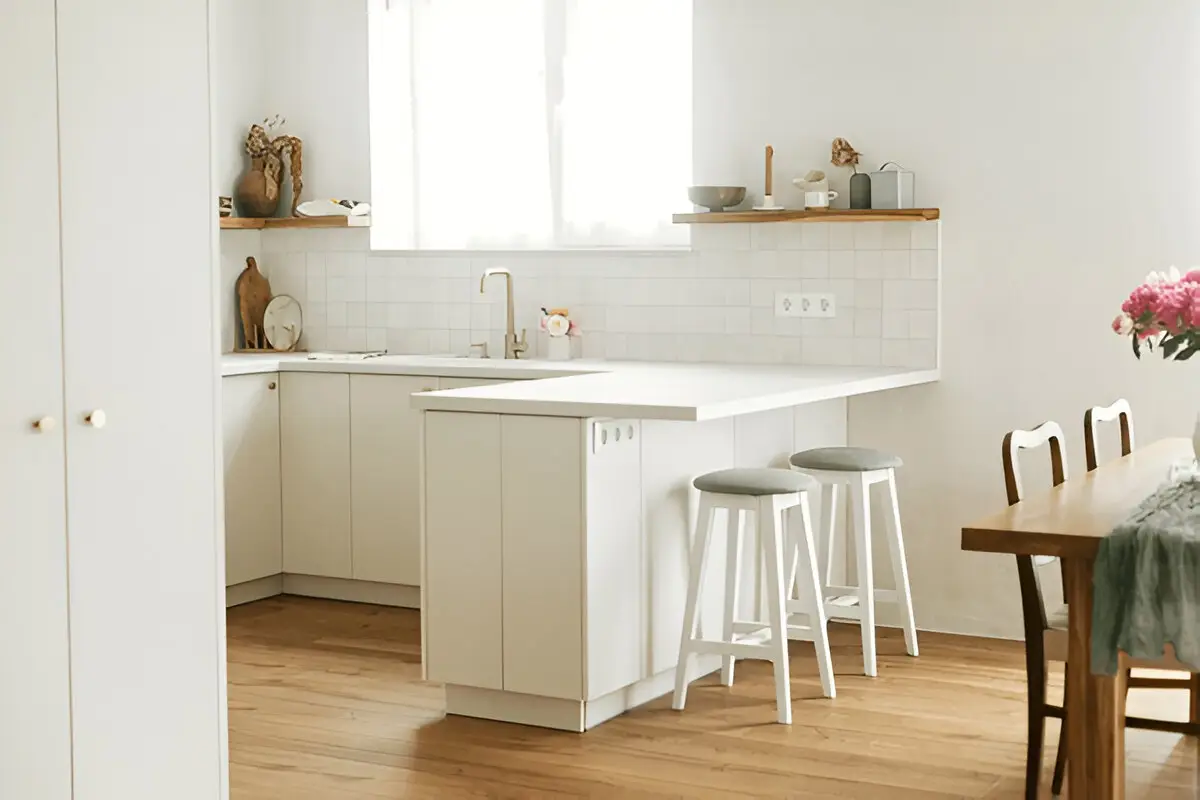

A small island can add the prep space, storage, and seating a compact kitchen is missing, but only if it’s sized to the room instead of to a Pinterest board. Here’s how to choose one that earns its footprint, what it costs in 2026, and how to build it from real base cabinets.
A small kitchen island adds counter space, storage, and a kitchen highlight. A well-chosen compact kitchen island can be ideal for small areas. With many designs and materials, finding the right one is easier than ever. They’re made to fit one-wall kitchens, making the most of small spaces.
Bring your measurements to any USA Cabinet Express showroom in TX, VA, or MO, and we’ll lay out an island that works before you spend a dollar.
Schedule a Free Consultation
| Work aisle, one cook | 42″ |
| Work aisle, two cooks | 48″ |
| General walkway | 36″ |
| Behind a seated diner | 32–44″ |
| Above an island cooktop | 30″ |
| Smallest useful footprint | 4 ft × 2 ft |
| Typical depth | 24–30″ |
| Max share of kitchen floor | ≤ 10% |
| Width per seat | 24″ |
| Overhang at counter height (36″) | 14–15″ |
| Knee depth: table / counter / bar | 18 / 15 / 12″ |
| Add a kitchen island (installed) | $3,000–$8,000 |
| Cabinets, semi-custom (Fabuwood) per lin. ft | $200–$550 |
Most advice about small kitchen islands starts with the island. That’s the wrong end. In a compact kitchen the deciding factor is almost never the island itself. It’s the space left over once the island is in. Get that backwards and you end up with the regret that shows up most often online: an island that’s technically beautiful and practically in the way.
So this guide works the way a designer actually plans a small kitchen: measure the room first, decide what the island is for, then choose a size, a type, and a material that fit. There’s a small-island version for almost any tight floor plan: a slim prep counter, a breakfast perch for two, or a cart you roll out of the way. A few setups don’t fit, and this guide is honest about those too.
First question: will an island actually fit?
This is the single most common thing people ask before they buy, and the answer comes down to one number: the walkway. Before you fall for a finish, measure the gap the island will leave on every side. If the clearances don’t work, nothing else about the island matters.
The National Kitchen & Bath Association sets the figures most designers build to. Memorize the first one: 42 inches of clear aisle around a working island for one cook. It isn’t arbitrary. A dishwasher or oven door swings roughly 24–27 inches into that aisle, and 42 inches lets you stand at the open door without being pinned against the island.
| Clearance | Minimum | Why it matters |
|---|---|---|
| Work aisle, one cook | 42″ | Room to stand at an open appliance door |
| Work aisle, two cooks | 48″ | One person passes behind another safely |
| General walkway (no work) | 36″ | Simple foot traffic through the kitchen |
| Behind a seated diner | 32–44″ | 32″ to pull out a stool; 44″ to walk past one |
| Over an island cooktop | 30″ | Vertical clearance to combustible cabinetry |
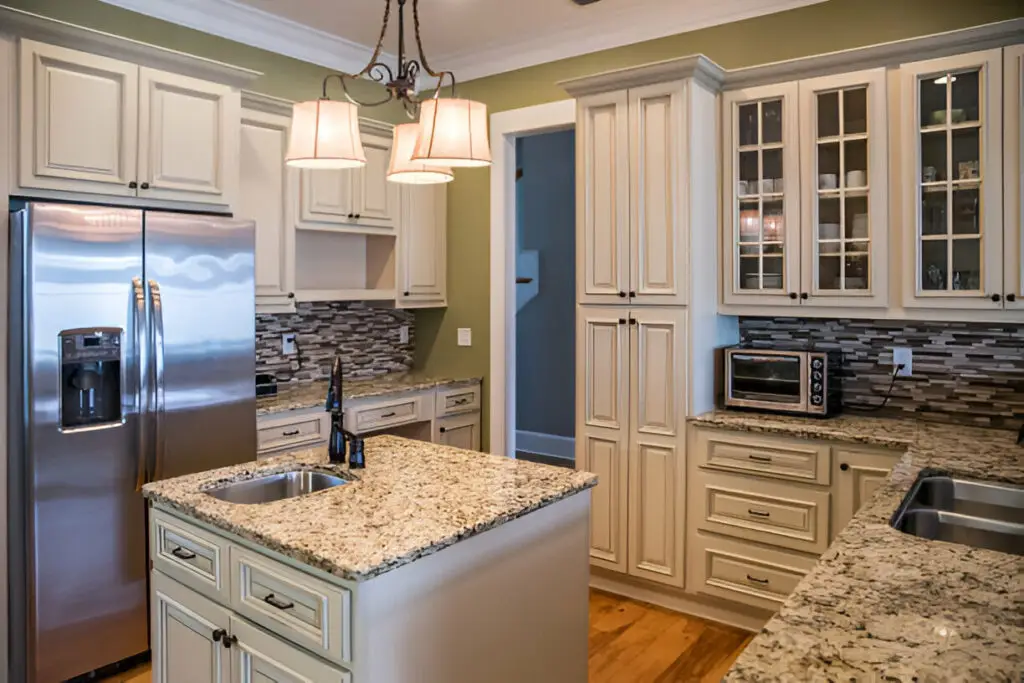
The regret isn’t “too small.” It’s “too big.”
Scroll through enough remodel forums and a clear pattern emerges. People rarely wish their small island were larger. They wish it were smaller, or placed differently. The complaints repeat: you can’t reach the middle of an oversized island to prep or wipe it down, and you get tired of walking all the way around to grab something off the far side. One homeowner with a 12×5-foot island summed it up: great surface, but a daily nuisance to circle.
In a compact kitchen the stakes are higher because there’s no slack to absorb the mistake. An island that swallows the walkway turns every cooking session into a squeeze. The honest rule for small rooms: the best island is the smallest one that solves your specific problem, not the biggest one that technically fits on the drawing.
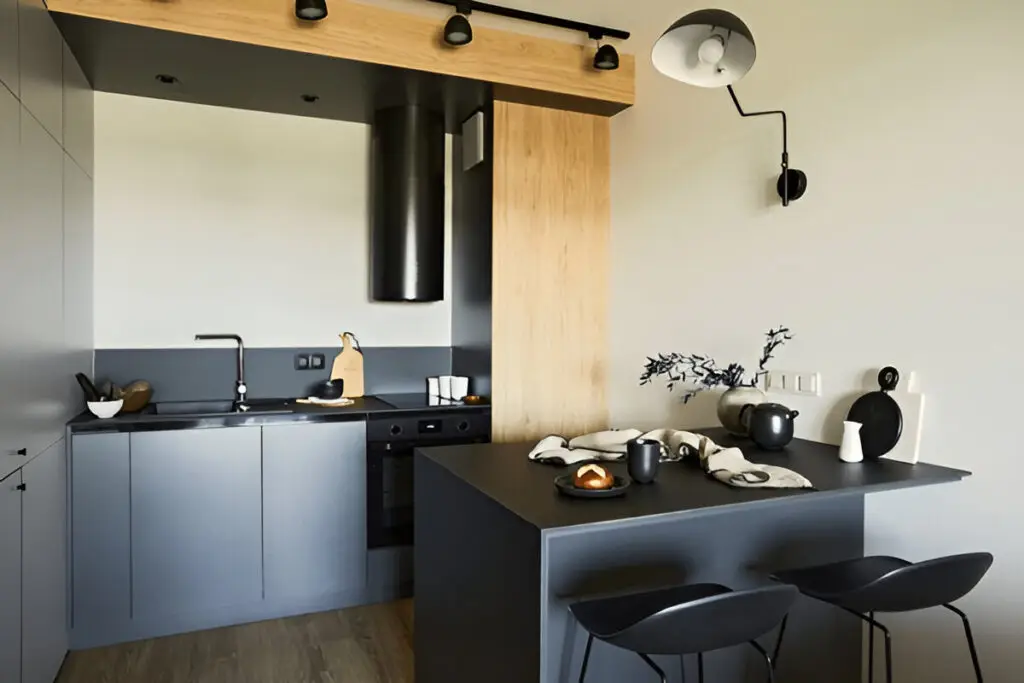
Right-sizing a small island
Once the aisles check out, size the island to the room with two guidelines. First, keep the island to roughly 10% or less of your total kitchen floor area. Past that, it starts crowding the work zones. Second, work back from the clearances above rather than starting with a target size.
For most compact kitchens that lands you around a 2-to-4-foot-wide, 24-to-30-inch-deep island. A 4×2-foot footprint is about the smallest that’s genuinely useful; a slim 24-inch-deep run is often the move in a galley because it adds counter without choking the corridor. And remember the trade-off designers point out: a modest island with seating and one good 36-inch walkway usually beats an awkward, undersized island jammed in to satisfy two walkways.
One nuance worth setting expectations on: a very small island is excellent for prep and storage but marginal as a dining table. If sit-down meals matter, prioritize the seating math below over squeezing in more cabinet.
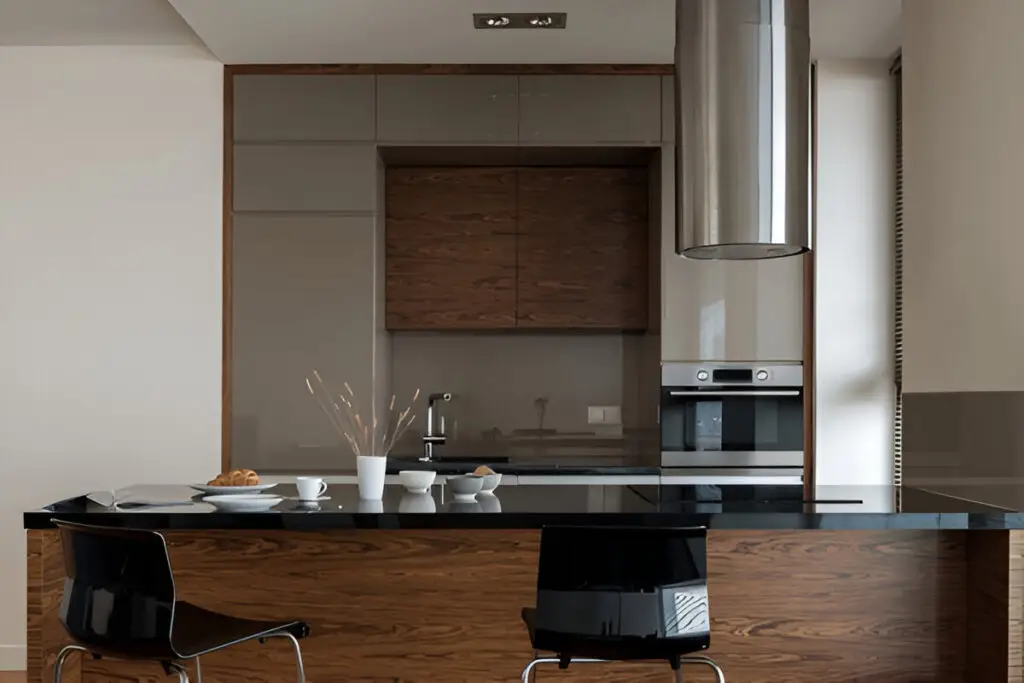
Five types that work in tight kitchens
“Island” doesn’t have to mean a permanent, fixed block. In small kitchens, the alternatives often outperform it.
Rolling cart. Wheels in for prep, rolls out when you need the floor back. The most flexible option for kitchens under ~13 feet wide, where a fixed island would kill the aisle. Look for locking casters so it stays put when you’re working.
Peninsula. Attached to your existing run on one end, so it needs clearance on fewer sides. A strong pick when a freestanding island won’t fit, and it still gives you a seating edge facing out.
Slimline / narrow. Long and shallow, built for prep and storage, not seating or appliances. Ideal in galleys where every inch of depth counts.
Square / compact block. When you’re short on length rather than width, a small square island can house a single feature (a prep sink or a hob) and free up the perimeter counters.
Drop-leaf. A hinged leaf folds down for daily life and flips up when you’re entertaining. Maximum surface when you want it, minimum footprint the rest of the time.
For a permanent island, the most durable version in a compact kitchen is simply base cabinets configured as an island, which is where the next two sections come in.
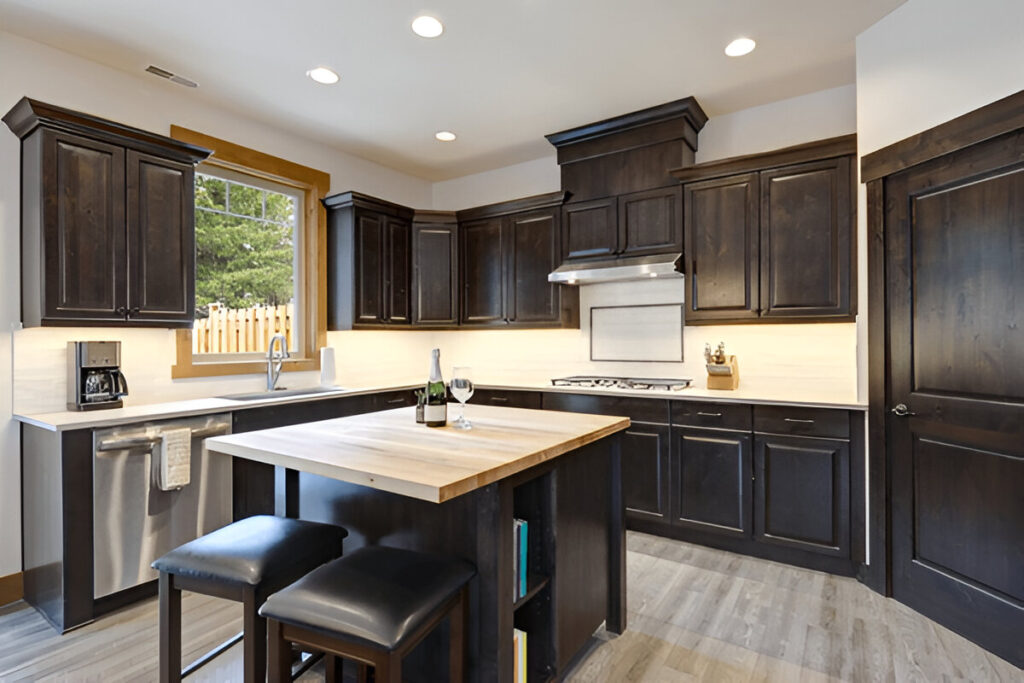
Storage that earns its footprint
In a small kitchen every cubic inch the island occupies has to give something back. The biggest lever is what goes inside the base.
Choose drawers over doors on the lower run. Deep drawers pull the contents out to you; a low cabinet makes you crouch and dig. For pots, lids, and waste bins, drawers win nearly every time. Reserve doored cabinets for tall or rarely used items, and add a pull-out for a bin so it isn’t eating prime counter space up top.
A quick way to compare options: estimate storage frontage: cabinet width × number of drawers/shelves × depth in feet. A 24-inch-wide island base with three drawers two feet deep gives you 144 inches of drawer frontage; the same box with two shelves gives 96 inches. Pick the configuration that absorbs the most of the clutter your perimeter can’t hold. Mix in a couple of open shelves on one end if you want the island to feel lighter and less boxy in a small room.
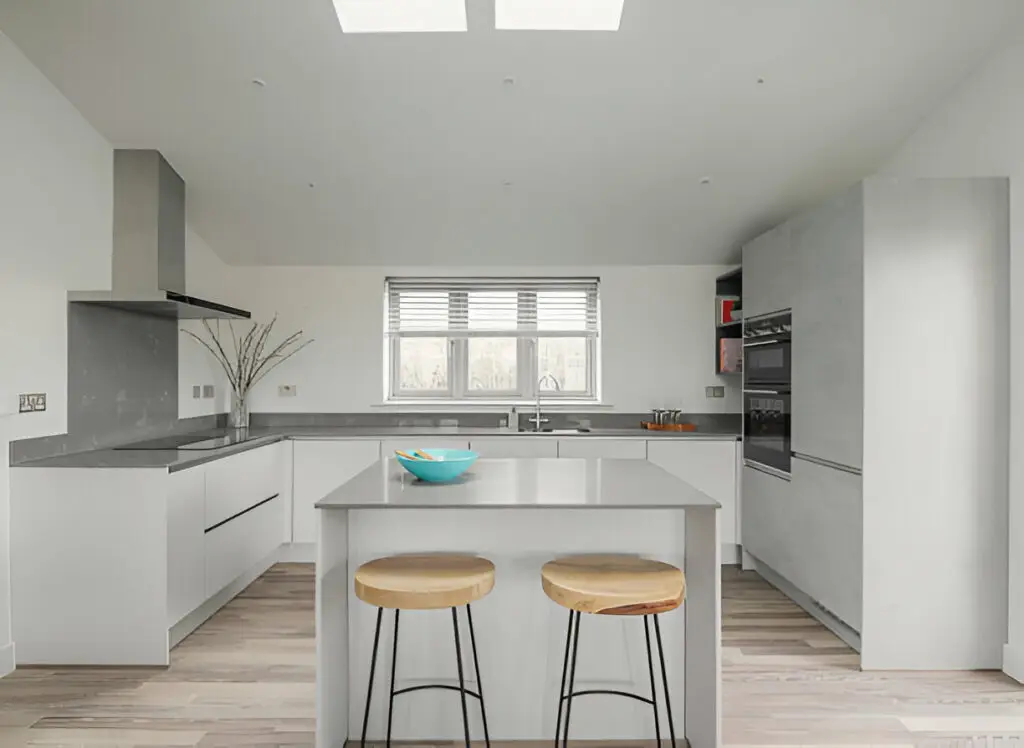
Seating, done with the numbers
Seating is where small islands fail quietly. People allow far less room than a stool actually needs. Two numbers keep it comfortable:
- 24 inches of width per seat. That’s shoulder and elbow room. Two stools means about 48 inches of clear edge, so don’t cram in a third to hit a number.
- Knee depth scaled to height: 18″ of overhang at table height (30″), 15″ at counter height (36″), 12″ at bar height (42″).
On overhang, the old 12-inch rule no longer fits a lot of modern barstools. Aim for around 14 to 15 inches, which is also about the maximum before the counter needs corbels or steel supports underneath. In a genuinely tight room, a single shorter overhang on the end of the island is smarter than a long bar that eats your walkway.
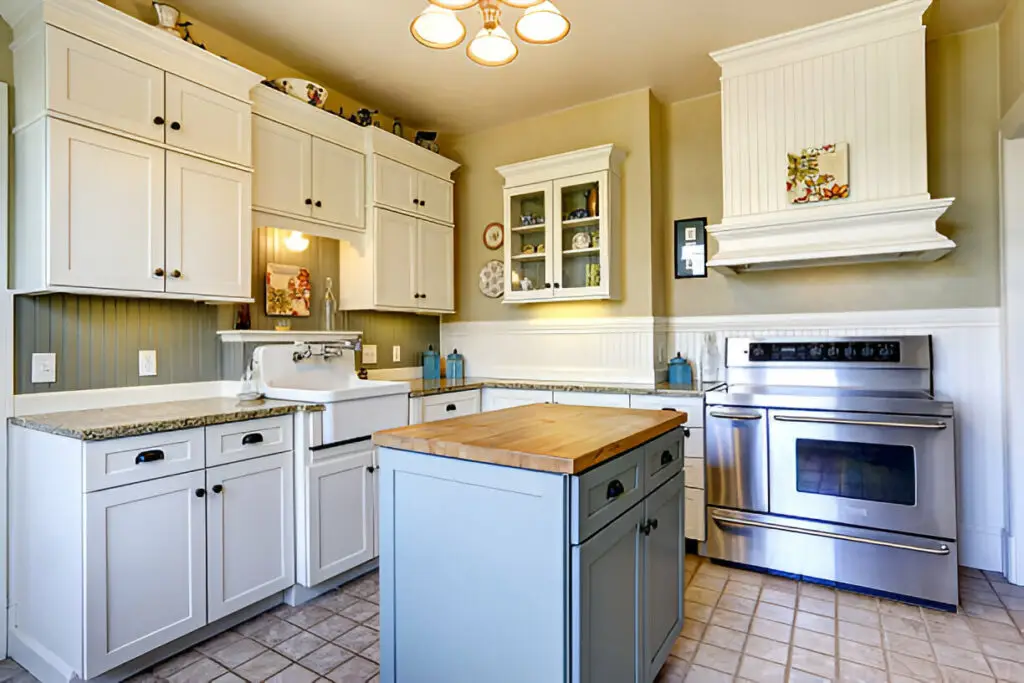
Countertop materials for a small island
On a small island the top takes a beating. It’s often the prep zone, the landing spot, and the breakfast bar all at once. Match the surface to how hard you’ll use it and how much upkeep you’ll tolerate.
| Material | Strengths | Watch-outs |
|---|---|---|
| Quartz | Non-porous, no sealing, shrugs off stains | Resin can scorch, so use trivets |
| Granite | Very heat-resistant, unique veining | Porous, so it needs periodic sealing; edges can chip |
| Butcher block | Warm, quiet, fully sandable and repairable | Oil every 1–3 months; wipe spills fast |
| Laminate | Cheapest, light, endless finishes | Scratches/burns aren’t repairable |
| Stainless | Hygienic, heatproof, nearly indestructible | Shows fingerprints; noisy; utilitarian look |
For finish, lighter tops and bases tend to make a small kitchen read as more open. If you want a darker island as a focal point, balance it with a light counter, and know that dark surfaces show daily wear and prints more in a high-contact room.
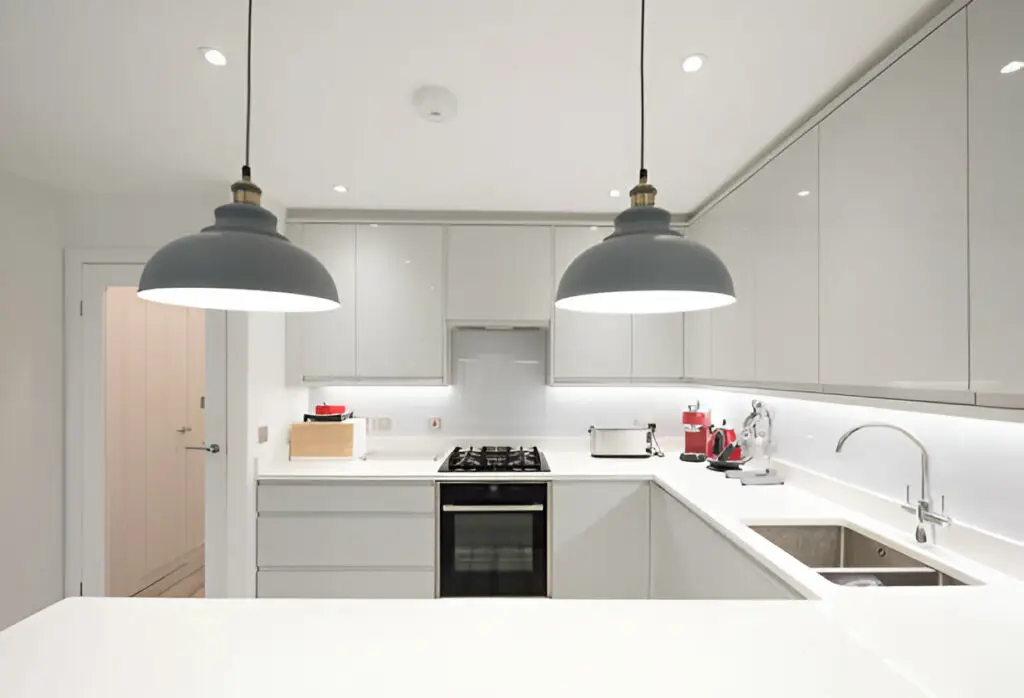
What a small kitchen island costs in 2026?
Because a small island is essentially a short run of base cabinetry plus a top, its price tracks the cabinets you choose. As a planning anchor, adding a kitchen island typically runs $3,000–$8,000 installed in 2026, with a compact, storage-only island sitting near the bottom of that band and a seated, appliance-equipped island climbing toward the top.
| Cabinet tier | Per linear foot (2026) |
|---|---|
| Stock, US-made | $120 – $350 |
| Stock, imported | $150 – $400 |
| Semi-custom (e.g. Fabuwood) | $200 – $550 |
| Full custom | $500 – $1,200+ |
A small island of 3–5 linear feet built in semi-custom cabinetry, then, lands in the low four figures for the boxes before counter and any plumbing or electrical. RTA (ready-to-assemble) cabinets are the budget route; Fabuwood is the sweet spot for most small islands; full custom makes sense when you need a precise fit for an odd footprint. Add a sink or cooktop and you’re into plumbing or electrical work. Budget for that separately, and confirm it’s worth the surface you’ll lose to it.
Common mistakes to avoid
- Oversizing it. The top regret. If you can’t reach the center or you’re always walking around it, it’s too big for the room.
- Stealing the walkway. Under ~36 inches of clearance and the kitchen becomes a bottleneck. Protect the aisle first.
- Forcing a fixed island into a galley. In a narrow kitchen, a rolling cart or drop-leaf almost always works better.
- Too many stools. Three squeezed where two belong makes seating uncomfortable for everyone.
- Doors where drawers belong. Low doored cabinets in an island bury whatever you put in them.
- Skipping the tape test. Five minutes with painter’s tape prevents the most expensive mistake on this list.
Build your small island with USA Cabinet Express
The most durable small island isn’t a furniture-store cart. It’s real cabinetry sized to your room. At USA Cabinet Express we configure islands from the same lines we build full kitchens with: Fabuwood semi-custom, Mantra, and budget-friendly RTA cabinets, with drawers, pull-outs, and finishes matched to your perimeter.
Want to see configurations? Browse our small kitchen island storage ideas and islands with seating for layouts you can build.
Want to see it before you commit? Try the kitchen visualizer, or bring your measurements into a showroom and we’ll lay out an island that keeps your clearances intact. We have showrooms across Texas (Austin, Dallas, Houston), Virginia (Chesapeake and Fredericksburg), and Missouri (St. Louis).
Frequently Asked Questions For Small Kitchen Islands
How small can a kitchen island be and still be useful?
About 4 feet by 2 feet is the smallest footprint that’s genuinely worth it. Below that it works as extra prep counter and storage, but it’s too small to comfortably seat and dine at.
How much clearance do I need around a small island?
Plan on 42 inches of clear aisle around a working island for one cook, 48 inches if two people cook at once, and at least 36 inches for a simple walkway. Less than 36 inches turns the kitchen into a bottleneck.
Is 36 inches of clearance enough for an island?
It’s the minimum for a path you only walk through. For an aisle where you actually cook, like opening the oven or dishwasher, 42 inches is the target. A common compromise in tight kitchens is one 36-inch walkway plus seating, rather than two cramped aisles.
Can a kitchen island be too big?
Yes, and it’s the most common island regret. An oversized island leaves you unable to reach the center to prep or clean it, and constantly walking around to the far side. In a small kitchen, the right island is the smallest one that solves your problem.
How much does a small kitchen island cost in 2026?
Adding a kitchen island typically runs $3,000 to $8,000 installed. A compact, storage-only island sits at the low end; one with seating, a sink, or a cooktop costs more. Built from semi-custom cabinets at $200–$550 per linear foot, a 3–5-foot island’s boxes land in the low four figures before the countertop.
What’s the best kind of island for a narrow galley kitchen?
A rolling cart or a drop-leaf unit, not a fixed island. In kitchens under about 13 feet wide, a permanent island usually eats the aisle, while a mobile or fold-down piece gives you surface when you need it and the floor back when you don’t.
How many stools fit at a small island?
Allow 24 inches of edge per seat. A 4-foot island comfortably seats two; squeezing in a third makes all of them cramped. Behind the stools, leave 32 inches to pull a seat out or up to 44 inches if someone walks past.
How deep should the seating overhang be?
Around 14 to 15 inches at standard counter height (36 inches), which is also about the maximum before the counter needs corbels or steel supports. Bar-height counters need less knee depth (around 12 inches); table height needs more (around 18 inches).
Should I choose drawers or doors in an island?
Drawers on the lower run, in most cases. They pull the contents out to you, while low doored cabinets make you crouch and reach. Save doors for tall items and add a pull-out for the trash bin.
What’s the best countertop for a small island?
Quartz is the easiest to live with, non-porous and no sealing, as long as you use trivets for hot pans. Butcher block is warm and repairable but needs oiling; granite is heat-proof but needs sealing; laminate is the budget pick; stainless is the most hygienic and durable.
Is a peninsula better than an island in a small kitchen?
Often, yes. A peninsula attaches to your existing cabinets on one end, so it needs clearance on fewer sides and fits where a freestanding island can’t, while still giving you a seating edge.
Can I put a sink or cooktop in a small island?
You can, but weigh it carefully in a compact island. Both consume prep surface and add plumbing or electrical cost, and a cooktop needs 30 inches of vertical clearance and ventilation. If the island is small, dedicating it to prep and storage is often the better use.
Clearance and sizing figures follow the NKBA Kitchen Planning Guidelines. For more island planning pitfalls, see Fabuwood’s kitchen island guide. Cost ranges reflect 2026 US market figures.