
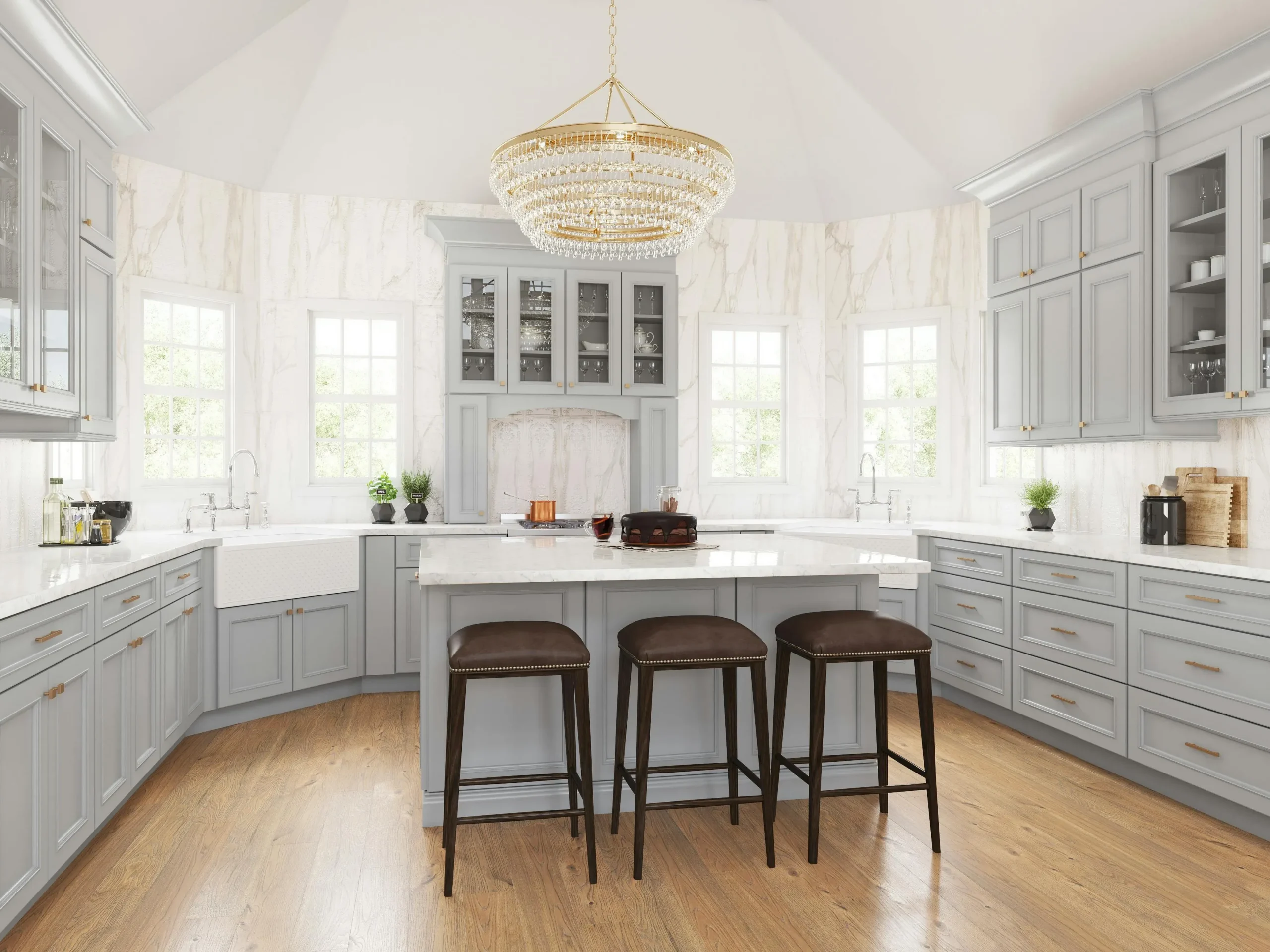

Slab cabinet doors are the flat, unbroken door fronts driving the modern kitchen. No frame, no raised center, no grooves. Just one clean panel. And they are having a moment. In the NKBA 2026 Kitchen Trends data, roughly 69% of design pros said flat-panel doors are gaining ground, second only to Shaker in overall use. If you want a kitchen that reads sleek, wipes clean in seconds, and stretches a remodeling budget, slab cabinet doors belong on your shortlist. This guide covers what they are, how they are built, what they cost, and how to pick one that lasts.
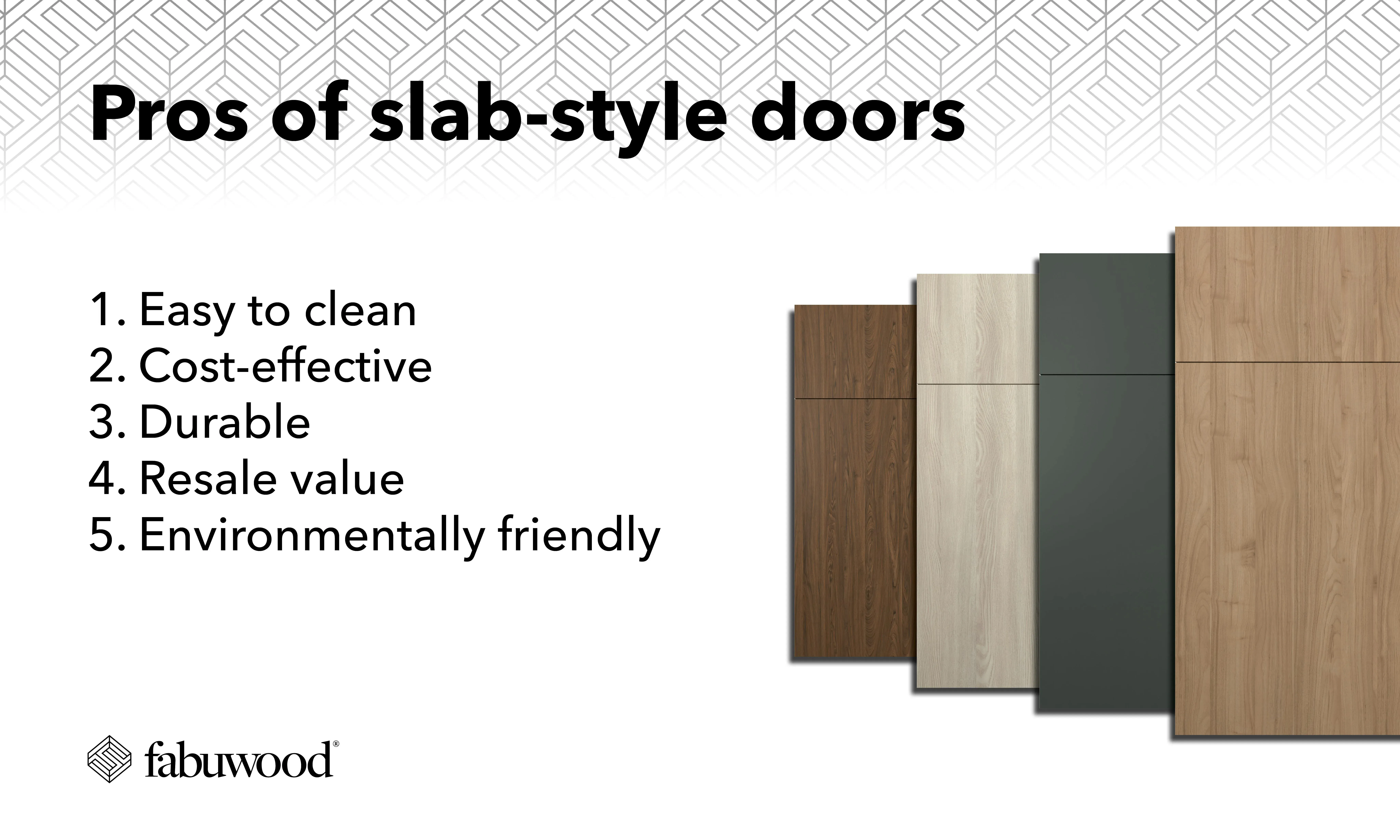
Slab doors at a glance
See slab doors in person before you commit.
USA Cabinet Express stocks flat-panel lines across seven showrooms in Texas, Virginia, and Missouri. Bring your measurements and leave with real samples.
What Is a Slab Cabinet Door?
A slab cabinet door is a single, flat panel with a smooth face and no applied frame or profile. You will also hear it called a flat-panel door, and in the trade it often gets tagged “European style” because frameless European cabinetry made the look famous. The whole appeal is subtraction. Strip away the stiles, rails, and recessed panel of a Shaker door, and you are left with an uninterrupted surface that makes a kitchen feel calm and open.
One point trips people up, so let us clear it now. A slab door is about the door face. Frameless construction is about the cabinet box. They pair together constantly, which is why the terms blur, but they are not the same thing. You can hang a slab door on a traditional face-frame box, and you can put a Shaker door on a frameless box. If the box construction is what you are weighing, read our guide to frameless kitchen cabinets. This page is about the door. For the full lineup of profiles, our complete guide to kitchen cabinet door styles ranks all 15.
Slab vs. Shaker: The Honest Comparison
Shaker and slab are the two doors most kitchens come down to. Shaker owns roughly half the market on staying power. Slab wins on clean lines and easy upkeep. Neither is “better.” They are built for different jobs.
| Factor | Slab (Flat-Panel) | Shaker (5-Piece) |
|---|---|---|
| Look | Modern, minimalist, clean-lined | Transitional, works anywhere |
| Cleaning | Easiest, one wipe, no grooves | Corners trap dust and grease |
| Cost | Often lower, simpler build | Slightly higher, more milling |
| Resale safety | Strong in modern markets | Safest across all buyers |
| Repairability | Surface damage may need a full swap | Individual pieces can be fixed |
| Best for | Contemporary, handleless, busy kitchens | Traditional to transitional homes |
Short version: if you cook a lot and want the fastest cleanup and the most current look, slab. If you want the widest resale appeal and the option to repaint down the road, Shaker. Plenty of kitchens use both, slab on the island and Shaker on the perimeter, or the reverse. Torn between them? Slim (or skinny) Shaker uses a narrow 2-inch frame that reads almost as clean as slab while keeping a hint of detail, and it comes up again and again as the compromise buyers land on.
What Slab Cabinet Doors Are Made Of
A slab door looks simple, but the material under the surface decides whether it lasts 20 years or warps in three. Here is what actually matters.
The core
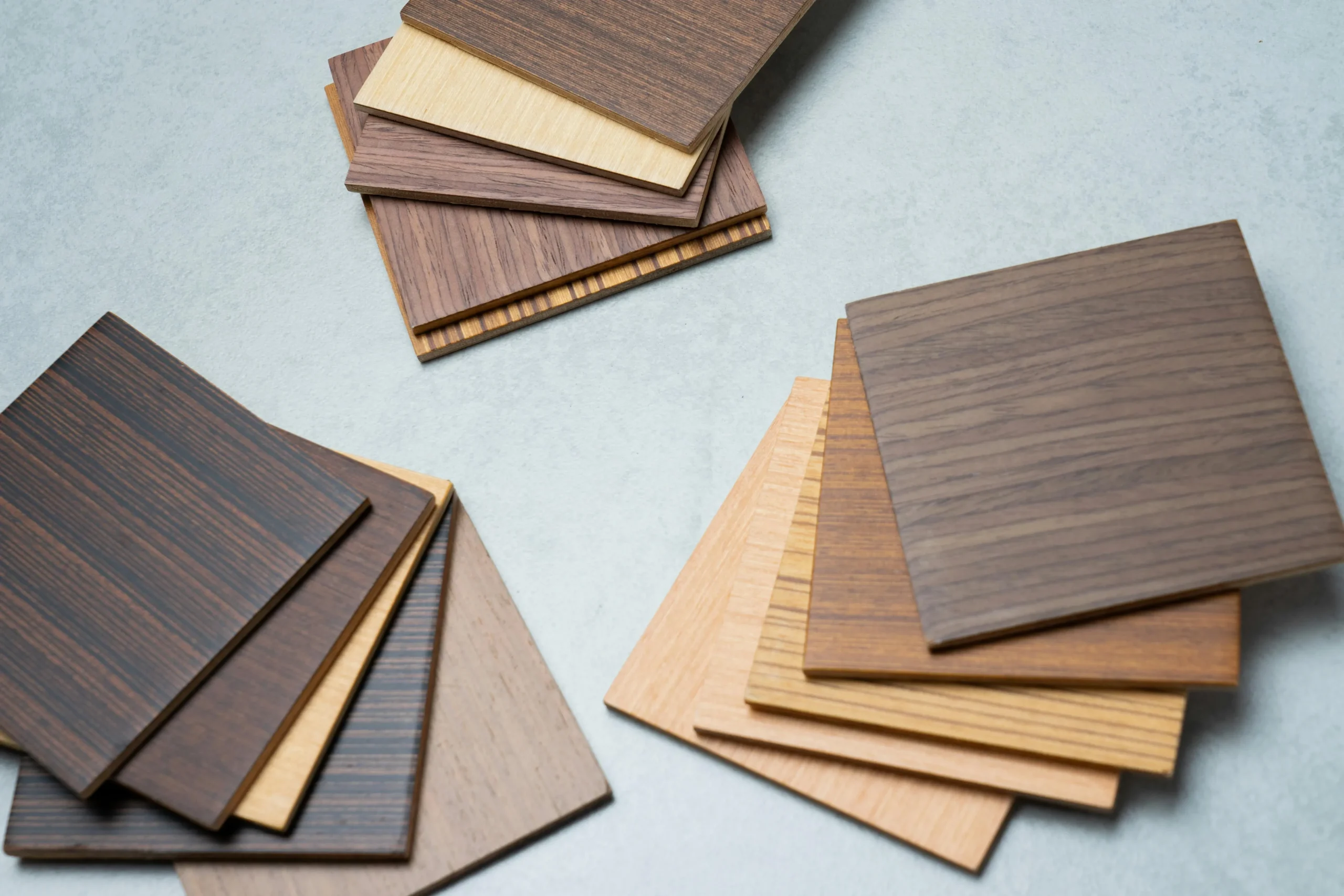
Most slab doors are built on an engineered core, then wrapped or painted. High-density MDF is the workhorse. It is dimensionally stable, meaning it swells and shrinks evenly instead of cupping like solid wood, so it stays flat and takes paint beautifully. Plywood cores carry a lower embodied carbon footprint and shrug off moisture a little better, which is why they are worth the upcharge in humid climates. Particleboard is the budget floor. It works, but it is heavier, weaker at the screw holes, and unforgiving once water finds an unsealed edge. Solid wood slab doors exist, but wide solid panels move with humidity, so most quality makers reserve solid wood for framed styles and build slabs on engineered cores by design. Cabinetmakers say it plainly on the trade forums: a simple solid-wood glue-up is fine for a small drawer front, but on a full-size door it can cup or warp, which is exactly why engineered cores win for doors.
The surface
This is where slab doors get their personality. Painted MDF gives you crisp, uniform color. Wood veneer over a stable core shows off real grain, and it is the reason warm woods like white oak and walnut look so good in slab form for 2026. Thermofoil wraps the door in a heat-sealed vinyl for a smooth, continuous finish at a friendly price. High-gloss acrylic and laminate deliver that mirror-like, ultra-modern face. Matte and satin finishes now lead painted orders, close to 70%, because they hide fingerprints and small scratches far better than gloss and keep the door looking newer between touch-ups.
The edges
On a slab door, the edge banding is the whole ball game. Because the core is exposed all the way around, the band that seals those edges is what keeps moisture out. Solvent-free polyurethane reactive, or PUR, edge banding is the current standard. It bonds tight and resists heat and water. Cheap doors with loose or thin banding fail fast once steam and spills get into an MDF core. When you shop slab, run your thumb around every edge and ask what adhesive was used.
| Core / Surface | Strength | Watch out for | Best for |
|---|---|---|---|
| MDF, painted | Stays flat, flawless paint | Edge swelling if unsealed | Bold painted color |
| Plywood, veneer | Moisture-tough, real grain | Higher cost | Warm wood looks, humid climates |
| Thermofoil | Smooth, budget-friendly | Heat near ovens can peel | Clean white modern kitchens |
| High-gloss acrylic | Striking, reflective, durable | Shows fingerprints | Ultra-modern statement kitchens |
Pros and Cons of Slab Cabinet Doors
The upside
- Fastest surface to clean, no grooves or corners
- Modern, unbroken look that suits handleless designs
- Usually costs less than a five-piece Shaker
- Less material and waste per door
- Works with push-to-open and integrated pulls
The trade-offs
- Surface dents or scratches may mean a full door swap
- A large flat face shows dust and prints, gloss especially
- Edge quality is make-or-break, cheap banding fails
- Reads too plain in very traditional homes
- Harder to repaint than a paint-grade Shaker
How Much Do Slab Cabinet Doors Cost?
Here is the question everyone actually asks: are slab doors cheaper or more expensive than Shaker? Both answers are true, and the reason is the substrate and finish, not the flat shape. A melamine-wrapped particleboard slab is one of the cheapest doors you can buy. A grain-matched white oak veneer or a high-gloss lacquer slab can cost more than a five-piece Shaker, because the finishing and grain-matching take more skilled labor. Use these per-linear-foot ranges (door plus box) as planning anchors, then price your real layout. At USA Cabinet Express, affordable kitchen packages start around $2,163.
| Slab door type | Cost per linear ft (door + box) | Typical use |
|---|---|---|
| Melamine / particleboard | $100–$300 | Rentals, budget refresh, garages |
| Thermofoil on MDF | $150–$350 | Clean white modern kitchens |
| Painted MDF | $200–$500 | Color-forward main kitchens |
| Wood veneer on plywood | $300–$700 | Warm-wood 2026 looks |
| High-gloss acrylic or solid wood | $400–$1,000+ | Statement contemporary kitchens |
Why can slab cost more than Shaker? Cabinetmakers are blunt about this on the trade forums: a particleboard-and-melamine slab is cheaper than a poplar five-piece Shaker, but a grain-matched white oak veneer or a high-gloss paint slab runs more. High-gloss finishing and veneer grain-matching are labor-intensive. The flat shape is not what moves the price, the material and finish are.
What buyers actually worry about (from real kitchen forums)
“Will slab look dated in 10 years?” It can if you chase a trend color or heavy gloss. Timeless materials age better, a natural white oak or walnut veneer and a matte neutral still look fresh years later. And because doors are just doors, you can swap fronts down the road without touching the boxes. As one remodeler put it, “go flat, if you don’t like it in 10 years, change the doors.”
“Does flat-panel hold up as well as Shaker?” Durability comes from the core and the edge sealing, not the flat face. A quality MDF or plywood core with tight PUR edge banding handles a busy kitchen fine. Homeowners who raise this worry tend to report back months later that the doors still look great.
“Is slab really the cheaper option?” Only sometimes. Budget melamine and thermofoil slabs beat Shaker on price. Premium wood-grain and high-gloss slabs cost more. Match the substrate to your budget and the math works out.
Best Finishes and Colors for Slab Doors in 2026
The all-white gloss kitchen is fading. For 2026, slab doors are going warm and tactile. White oak and walnut veneers lead the wood story. Matte painted slabs in warm neutrals like mushroom, greige, and muted greens are everywhere, and MasterBrand named a near-black green its finish of the year. Two-tone layouts pair a wood or dark slab base with lighter uppers for depth without clutter. If you love high-gloss, keep it to an island or a single run so the reflection stays a feature, not a fingerprint magnet. For a deeper look at what is trending, see our roundup of the latest kitchen cabinet design trends.
Where Slab Doors Work Best
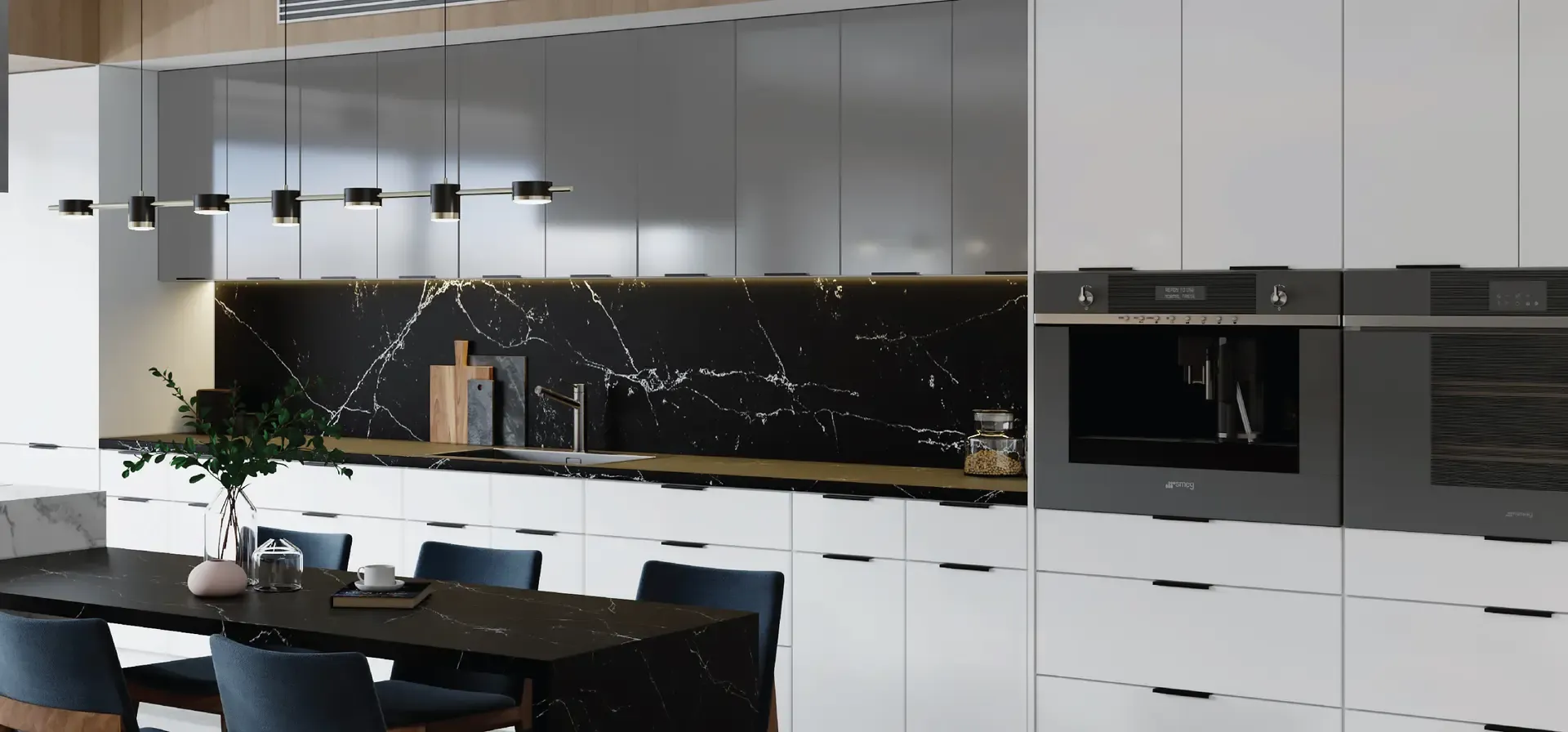
Slab doors shine in contemporary and minimalist kitchens, but the real magic is in the details. Go handleless with push-to-open hardware or integrated finger pulls, and the flat face becomes a single unbroken plane. Wrap an island in a wood-veneer slab and let it anchor the room. Run floor-to-ceiling slab pantry fronts to hide clutter behind a quiet wall of doors. Because there is no profile to fight, slab plays well with bold stone, waterfall edges, and statement hardware when you do want a handle. Pair the right pull carefully, our guide to kitchen cabinet hardware walks through the sizing.
One Thing to Get Right: Installation
Slab doors are less forgiving than framed doors during install, and it is worth knowing before you order. With no frame lines to break up the surface, any uneven gap between doors shows immediately across that clean run. Reveals have to be even, hinges dialed in, and handleless push-to-open fronts set precisely so they sit flush. That is why pros steer slab buyers toward professional installation, or at minimum careful, patient leveling. If you go the ready-to-assemble route, take your time on alignment. It is the difference between a kitchen that looks custom and one that looks a little off.
Caring for Slab Cabinet Doors
This is the easy part. A slab door wipes clean with a soft, damp cloth and a mild cleaner, no scrubbing into corners because there are no corners. Skip abrasive pads and harsh solvents, which can dull matte finishes and cloud gloss. Dry any spills near the edges quickly so moisture never sits on the banding. On high-gloss doors, a microfiber cloth keeps streaks and prints down. Treat the edges with respect and a quality slab door will outlast the trends that made you want it.
Slab doors, in stock, ready to pick up
At USA Cabinet Express you can get flat-panel doors without the custom-order wait. Fabuwood’s Illume series (Catalina and Tuscany) gives you frameless, full-overlay slab doors with tight PUR edge banding and lacquered MDF surfaces. Prefer high-gloss? Ask about our Bianco Gloss and matte Carbone fronts. Our own RTA line ships flat for same-day pickup.
Slab Cabinet Door Options at USA Cabinet Express
You do not have to guess at quality. Across our seven showrooms we carry slab and flat-panel fronts built to standards you can verify. Fabuwood’s Illume line delivers frameless full-overlay slab doors on CARB2 and TSCA Title VI compliant cores, so off-gassing stays low and edges stay sealed. For a budget-smart route, our ready-to-assemble line ships flat, cuts transport cost, and still uses plywood boxes with soft-close hardware. Want to compare slab against every other profile first? Start with the complete cabinet door styles guide, then come see the doors in Austin, Dallas, Houston, Chesapeake, Fairfax, Fredericksburg, or St. Louis. Book your free consultation and start designing.
Slab Cabinet Doors Frequently Asked Questions
Are slab cabinet doors cheaper than Shaker?
Usually, yes. A slab door is a single flat piece, so it takes less milling and joinery than a five-piece Shaker. The exception is premium wood veneer on a plywood core, which can cost more than a paint-grade Shaker. Material and finish drive the price far more than the flat shape itself.
Are slab cabinet doors going out of style?
No. Flat-panel doors are gaining, not fading. NKBA 2026 data shows about 69% of design pros see slab growing, especially in modern and minimalist kitchens. Warm wood-veneer slabs and matte painted slabs are among the strongest looks heading into 2026.
What is the difference between a slab door and frameless cabinets?
A slab door describes the flat door face. Frameless describes the cabinet box built without a face frame. They are often used together for a fully modern look, but you can mix either one with the other. If your question is really about the box, read our frameless cabinets guide.
What material is best for slab cabinet doors?
For painted color, high-density MDF stays flat and takes paint cleanly. For real wood grain or humid climates, wood veneer on a plywood core holds up best. Whatever the core, insist on solvent-free PUR edge banding so the edges stay sealed against moisture.
Do slab cabinet doors warp?
A quality slab door built on MDF or plywood resists warping because engineered cores move evenly instead of cupping like wide solid wood. Warping usually traces back to a cheap particleboard core, thin edge banding, or moisture getting into an unsealed edge.
How do you clean high-gloss slab doors without streaks?
Use a soft microfiber cloth with a mild, non-abrasive cleaner, then buff dry. Skip ammonia-heavy sprays and scouring pads, which can dull or scratch the finish. A quick microfiber pass keeps fingerprints off the reflective surface.
Why are slab doors sometimes more expensive than Shaker?
Because price follows the substrate and finish, not the flat shape. A particleboard-and-melamine slab is cheaper than a five-piece Shaker, but a grain-matched wood veneer or a high-gloss lacquer slab costs more, since those finishes take more skilled labor. Many showrooms quote slab higher for exactly this reason.
Can I convert my existing cabinets to slab doors?
Often yes. If your cabinet boxes are structurally sound, you can reface them by swapping the doors and drawer fronts for slab fronts, which costs less and wastes less than full replacement. The catch is matching new door sizes to your existing boxes, so confirm the fit before you order.
Do slab cabinet doors look dated?
They can if you pick a trend color or heavy gloss. Timeless choices age well: natural wood veneers like white oak and walnut, or a matte neutral. And since doors are replaceable, you can refresh the look later without redoing the boxes.